


CPM (Cost Per Mille) in digital advertising: definition, formula, benefits, drawbacks, and how it compares with CPC and CPA for different campaign goals.

Even if you are not new to the world of affiliate marketing, you may still wonder: what is CPM? Perhaps you have not worked with this model before because it seems difficult to understand or less effective than alternatives such as CPC or CPA. In this article, we’ll explain what CPM is and explore its advantages and challenges for both publishers and advertisers.
What is CPM: Definition and its Role in Affiliate Marketing
CPM is one of the key pricing models in affiliate and digital marketing. Advertisers pay for every 1,000 impressions of their ads, while publishers earn revenue for every 1,000 impressions served on their websites or apps. The abbreviation stands for Cost Per Mille, where mille is the Latin word for “thousand.”
The key feature of this model is that advertisers pay for impressions regardless of whether users click on or interact with the ad. The formula looks like this:
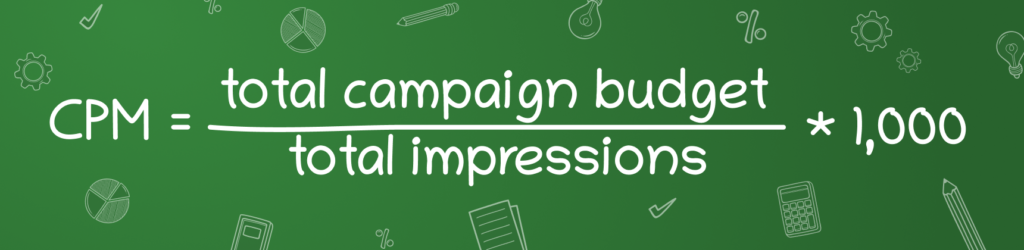
This model is particularly popular in affiliate and digital marketing because it focuses on brand visibility and audience reach. For publishers, CPM provides a relatively stable revenue stream since earnings depend on the number of ad impressions rather than user actions. For advertisers, it is an effective option when the goal is to maximize reach and increase brand awareness by delivering ads to a broad audience.
Create CPM ads and Boost your brand awareness!
- Advanced targeting options
- Direct traffic sources
- Self-serve platform
- Fully-managed service
- Personal support
- The min deposit is $50

Comparison of CPM, CPC, and CPA: which model is best?
At first, it may be difficult for both publishers and advertisers to distinguish CPM from CPC and CPA. These models may look similar, but each serves different purpose and fits different campaign goals. In this section, we’ll explain the difference and help you choose the most suitable model.
CPM (Cost Per Mille)
It is based on the cost of 1,000 impressions, which means that advertisers pay for the number of times their ads are shown, regardless of whether users interact with the ad. This model is ideal when the goal is to increase brand awareness and visibility. Publishers choose such payout format because they earn revenue based on particular volume of traffic they generate, even if users don’t click on or engage with the ad.
CPC (Cost Per Click)
As the name suggests, advertisers pay for every click on an ad. The model is based on results and is often used when the goal is to drive traffic to a website or landing page. It is attractive for advertisers looking for measurable user actions and is especially useful for direct-response campaigns.
CPA (Cost Per Action)
The CPA model allows advertisers to pay only when a user performs a specific action, such as making a purchase, subscribing to a newsletter, or downloading and installing an app. This model is often the best choice for campaigns focused on conversions and specific KPIs. While it can be very cost-effective, it often requires more fine-tuning and precise targeting.
Comparative table of all three models
| Model | Billing model | Best for | Advantages | Disadvantages |
| CPM | 1,000 Impressions | Brand awareness, large audience | Predictable costs, broad reach | Does not guarantee user interaction |
| CPC | Click on the ad | Driving website traffic | Performance-based, trackable results | Can become expensive with high CPCs |
| CPA | Specific user action (purchase, sign-up, etc.) | Conversions, sales, sign-ups | Pay only for completed actions, performance-focused | Often requires detailed targeting and optimization |

Run CPM, CPC, or CPA ad campaigns at HilltopAds
And boost your ROI!
Which model is the best?
There is no single best model for everyone; the right choice depends on your goals and budget. If your priority is visibility and brand recognition, CPM is ideal because you pay for impressions, ensuring broad reach. If your goal is to drive traffic and increase clicks, CPC is often the best choice thanks to its performance-based approach. If your main goal is conversions, CPA is the right option because you pay only when users complete a specific action. You can also combine two or even all three models to create a more comprehensive marketing strategy.

Abhishek
From PublisherGrowth, one of the biggest resources for publishers and bloggers looking to monetize their traffic.
Website: publishergrowth.com
A publisher needs to understand the content and nature of their website, that will differ depending on the model. Coupons, downloads, and deals websites can work very well for CPA models. Intent-driven websites can work for CPC while news and generic websites can work for Cost Per Mille models. Also remember:
CPM: It’s a safer, more stable, ideal for content publishers with good traffic but uncertain user actions. This model is low risk, low reward.
CPC: It is rewarding if the audience is click-friendly and engaged. We can say this model is medium risk and medium reward.
CPA: This is a high-risk, high-reward – best for affiliate-focused publishers with strong purchase or lead intent audiences.
Pros and cons of CPM
We have already looked at some of the model’s benefits, and it remains popular in affiliate and digital marketing because of its strengths. However, no pricing model is perfect, and CPM also has its limitations. Let’s take a closer look at its main advantages and disadvantages.
Advantages of CPM model
Suitable for beginners
This model is often considered a good starting point for those who are new to affiliate and digital marketing. It is easy to understand: advertisers pay for ad impressions, while publishers earn revenue based on those impressions.
Affordable for broad reach
CPM can be a cost-effective way to reach a large audience. Since advertisers pay for impressions rather than clicks or conversions, the model allows them to maximize visibility without the higher costs often associated with performance-based models.
Ideal for brand awareness
CPM is well suited for campaigns focused on brand awareness. Since advertisers pay for impressions, ads are shown to a broad audience, helping increase visibility and recognition. This makes CPM particularly effective for campaigns where exposure is the primary goal
Disadvantages of CPM model
Potential for low-quality traffic
Since payment is based on impressions, there is no guarantee that users will actually interact with the brand. While CPM can provide broad reach, it does not guarantee traffic quality. If your ads are shown to users who are not interested in your product or service, conversion rates may be low.

Josh Sebo
COO of OfferVault, the largest affiliate marketing resource.
Website: offervault.com
Traffic quality in CPM campaigns can be determined through multiple metrics like engagement rates (CTR, time on page), bounce rates, viewability scores, and post-impression conversions. You may also use tools like fraud detection software, heatmaps, and analytics platforms to identify suspicious patterns. To improve traffic quality without increasing costs, advertisers can:
– Use whitelisting and blacklisting to target high-performing sites and exclude underperforming placements.
– Implement geo-targeting and device segmentation to focus on audiences more likely to engage.
– Leverage AI and machine learning to optimize bidding strategies dynamically.
– Work with trusted advertising networks and publishers that prioritize transparency and fraud prevention.
Not ideal for all campaigns
Although this model is versatile and offers many advantages, it is not suitable for every campaign. For example, if your primary KPI is completed purchases or registrations, CPM may not deliver the desired results.
Limited control over engagement
Impressions are a broad metric, and they do not always reflect actual user engagement. If an ad is shown to users who do not interact with it, advertisers still pay for those impressions, even if the campaign generates few clicks or conversions.
With HilltopAds, you can be sure of the results!
Your ads will drive conversions, and you’ll start making good money.
What is CPM for advertisers?
For advertisers, CPM is a useful model for campaigns focused on impressions rather than user actions. Advertisers using CPM pay for delivering their ads to a wide audience, which makes this model particularly useful for brand awareness and visibility campaigns rather than direct sales or leads.
Let’s take a closer look at the example from the advertiser’s point of view:
CPM = (cost of advertising campaign / number of impressions) * 1000 = ($1,000 / 200,000) * 1000 = $5
This means the advertiser pays $5 for every 1,000 impressions. Knowing this rate helps with budgeting and cost management.
Best ad campaigns for CPM model
The Cost Per Mille model is best suited for campaigns aimed at broad reach and increased brand awareness. For example, if an advertiser launches a new product or wants to scale to a wider audience, CPM can help ensure that ads are shown to as many people as possible. However, this does not guarantee engagement in the form of clicks, registrations, or downloads.
How to track results for CPM campaigns
Tracking CPM campaigns can be challenging because they focus on impressions rather than direct user actions. One important metric to monitor is Click-Through Rate (CTR), which shows how many users clicked on the ad after seeing it. A low CTR may indicate that, although the ad is being shown frequently, it is not engaging users effectively. Advertisers should also track conversions to understand whether the campaign is leading to meaningful results despite paying for impressions.
Create your CPM ad campaign at HilltopAds and Get the best Results!
We provide you with the real high quality CPM traffic to make sure your ads get as many conversions as possible. We perform all the well-known affiliate niches such as:

Dating

iGaming

VPN, Pin-submit

eCommerce

Mobile apps & utilities

Sweepstakes
Josh Sebo
COO of OfferVault.
CPM is better than CPC or CPA for advertisers in scenarios like:
Brand awareness campaigns, where visibility matters more than clicks or direct conversions.
Retargeting, as showing ads to previous visitors increases the chances of conversion over time.
Video advertising, where engagement is more important than immediate action.
Programmatic advertising, where AI optimizes ad placements for maximum reach.
What is CPM for publishers?
For publishers, this model provides a steady revenue stream based on the traffic they generate. Publishers are paid for every 1,000 ad impressions displayed on their website, regardless of whether users click on the ads. This can be an effective model for publishers with high traffic volumes, allowing them to earn revenue simply from ad impressions.
Examples of CPM calculations for publishers
Let’s look at the formula from the publisher’s point of view:
CPM = (revenue / number of impressions) * 1000 = ($500 / 100,000) * 1000 = $5
This means the publisher earns $5 for every 1,000 impressions. Of course, not all traffic generates the same revenue – earnings depend on traffic quality and the type of ads displayed. Publishers with highly engaged audiences may earn higher CPM rates, while websites with lower engagement may see lower payouts.
How to increase your CPM rate
It’s not that simple, because publishers can’t directly influence CPM rates–they are usually set by advertisers or ad networks. However, publishers can improve traffic quality and optimize their websites to qualify for higher CPM deals. Here are some techniques that can help:
Work on content quality
No matter how attractive an offer is, poor design and low-quality content can drive users away. Focus on creating high-quality content that attracts visitors and encourages them to spend more time on your website.
Focus on high-value niches
Not all niches attract the same level of advertiser demand. Consider creating content in high-value verticals such as finance, technology, or healthcare, where CPM rates are often higher.
Pay attention to user experience
A smooth and engaging user experience can help increase visitor retention. Invest in clear navigation and a user-friendly design to encourage longer sessions and improve ad visibility.
Increase traffic volume
More traffic usually means more impressions. Grow your audience through organic channels such as SEO, backlinks, and community building, and complement them with paid advertising when appropriate.
Collaborate with trusted advertising networks
Work with reputable advertising networks like HilltopAds that offer competitive CPM rates and reliable targeting options. Before choosing a partner, check reviews from other publishers and look at successful case studies, especially in your niche.
Add your website and earn the highest CPM rates!
At HilltopAds, you will get the highest CPM rates for your website traffic our traffic from social media!
Abhishek
From PublisherGrowth.
Based on my experience, here are the best-working practices to boost your payouts on this model:
– Optimize the website content for high-CPM niches;
– Focus on organic and direct traffic rather than paid media;
– Create content for high-CPM verticals like Finance, Tech, Health, etc.;
– Gain in-depth knowledge when choosing the advertising network based on your niche and traffic sources/country;
– Implement header bidding to increase competition between multiple demand partners;
– Ensure ads are viewable (>70% viewability);
– Implement high-impact advertising formats like video (especially outstream).
Josh Sebo
COO of OfferVault.
There are also some lesser-known but still effective strategies, including:
Website heatmap analysis: use a heatmap to determine where ads should be placed for maximum engagement.
Time-based targeting: run campaigns during high-engagement hours to improve viewability.
Sequential messaging: display ads in a sequence to guide users through a funnel instead of a single impression.
A/B testing creative elements: test different headlines, images, and CTAs to maximize engagement.
eCPM vs. CPM for publishers
For publishers, eCPM (effective CPM) is a key metric for understanding real revenue. While CPM shows the cost of 1,000 impressions, eCPM shows how much a publisher actually earns from those impressions. This metric depends on factors such as traffic GEO, ad format, and traffic quality.
Abhishek
From PublisherGrowth.
From a publisher’s perspective, this model has gained popularity because it provides a stable revenue stream. Converting CPA and CPC models to an eCPM ensures publishers that their traffic is driving some revenue. Also, this makes publishers feel that every impression is monetized.
Additionally, with the growth of programmatic advertising, the Cost Per Mille framework allows dynamic pricing, giving publishers the opportunity to optimize fill rates and achieve higher revenue for quality traffic.
CPM myths
This model is surrounded by many myths about its effectiveness. However, most of them result from poorly optimized CPM campaigns. Let’s look at some of the most common misconceptions and see whether they’re true.
It is too expensive for advertisers
While CPM may seem expensive at first glance, it can be a cost-effective option for brand awareness campaigns that require broad reach. It is often more affordable than other models when the goal is to reach a large audience.
There is a lot of fraud in CPM campaigns
No advertising model is completely immune to fraudulent traffic. To reduce the risks, work with trusted ad networks like HilltopAds and use fraud detection tools to monitor traffic quality.
It is not profitable for publishers
CPM profitability depends largely on traffic quality and optimization. Testing different strategies, improving ad placement, and increasing traffic can help maximize revenue.
It is difficult to measure and track
CPM campaigns can be tracked by monitoring impressions and analyzing overall campaign performance. Tools such as Google Analytics and ad network dashboards make it easier to measure results.
Josh Sebo
COO of OfferVault.
One major myth is that all traffic from this pricing model is fraudulent, but this depends on where the impressions come from. Fraudulent traffic typically stems from low-quality advertising networks or sites using bot-generated impressions.
For example, in 2018, a major bot farm scheme generated billions of fake ad impressions, costing advertisers millions. However, top-tier publishers using viewability tracking and verification tools (e.g., MOAT, IAS, DoubleVerify) avoided losses by ensuring that ads were seen by real users.
Unusual anti-fraud tactics include:
Honey pot campaigns – running test campaigns with hidden tracking pixels to identify fraudulent sources.
Behavioral analysis – analyzing mouse movement and scroll depth to detect human versus bot interactions.
Direct partnerships – working directly with premium publishers instead of relying solely on open ad exchanges.
Final thoughts about CPM
Cost Per Mille is one of the most widely used pricing models in affiliate and digital marketing. Advertisers pay a fixed rate for every 1,000 ad impressions, while publishers earn revenue by displaying those ads. For publishers, CPM provides a reliable way to monetize traffic, while for advertisers, it is an effective choice for campaigns focused on brand awareness and broad audience reach.
CPM remains popular because of its simplicity and ability to deliver wide exposure at predictable costs. As competition for users’ attention continues to grow, it remains a practical option for campaigns focused on reach rather than direct conversions.
As digital advertising continues to evolve, CPM remains a relevant pricing model that adapts well to new technologies and advertising trends.
Josh Sebo
COO of OfferVault.
There are a few trends that are shaping the model in 2025 and will probably change the industry in the future:
– AI-driven predictive analytics. AI is helping advertisers bid more effectively by analyzing real-time data on user behavior, ad placements, and engagement patterns.
– Privacy-focused advertising. With third-party cookies fading out, contextual targeting and first-party data strategies are becoming crucial.
– Blockchain for transparency. Some networks are integrating blockchain to reduce fraud and ensure fair attribution of impressions.
– Programmatic enhancements. Real-time bidding (RTB) is evolving with machine learning to optimize CPM campaigns in ways that maximize exposure while minimizing wasted impressions.
HilltopAds is one of the best CPM ad networks!
We provide publishers with the highest CPM rates, while advertisers get the best real CPM traffic from all over the world.
Registred already?
