


This guide explains the most effective ways to monetize a website in 2026. You’ll learn when to start monetizing, which methods work best for different website types, and how to avoid common mistakes that reduce long-term revenue.

Website monetization is the process of generating revenue from your website. This can include display advertising, affiliate marketing, subscriptions, sponsored content, selling products, and other revenue models.
Key takeaways:
- Build consistent traffic before focusing on monetization.
- Choose monetization methods that match your website type.
- Combine multiple revenue streams without harming user experience.
- Optimize page speed and mobile usability.
- Monitor performance and adjust your strategy over time.
Successful monetization starts with a website that provides original content and attracts genuine visitors. Advertisers and partners look for real audience engagement rather than artificial traffic.

Start monetizing your website with HilltopAds
and start making good money.
A website ready for monetization typically has:
- Consistent, original, high-quality content
- A clear niche or target audience
- Genuine, engaged traffic
- A technically reliable website (fast loading, mobile-friendly, HTTPS)
Many website owners try to monetize too early. In most cases, it’s better to focus on publishing useful content and building a steady flow of organic traffic before expecting meaningful revenue. The amount you can earn depends far more on your niche, traffic quality, and monetization method than on a specific number of daily visitors.

Natali
Senior Publisher Manager at HilltopAds
When selecting a monetization method, a lot depends on the site’s audience and the content used by the webmaster. Properly selected advertising will not only not bother the user, but will also increase the time he spends on the site. The site owner needs to define a plan for the site’s development, based on which he should build a strategy for working with advertising.
For example, while promoting the site in search engines and attracting users through social networks, it is worth minimizing the use of advertisements. And when traffic becomes regular, the best period for its monetization comes.
Key Requirements for Website Monetization
Before you start monetizing your website, make sure these fundamentals are in place:
Gain an organic audience
Monetization starts with real visitors. Focus on attracting people through helpful content, search engines, email, and social media rather than relying on artificial traffic.
Secure your domain and technical setup
Use reliable hosting, HTTPS, and a stable technical setup. A secure, fast, and accessible website builds trust with both users and advertising partners.
Diversify revenue streams
Relying on a single income source can be risky. Combining display ads, affiliate marketing, subscriptions, or digital products can create more stable long-term revenue.
Match monetization methods
Choose monetization methods that fit your content and audience. Display ads often work well for news sites and content-heavy blogs, while affiliate marketing tends to perform better on niche websites where readers are looking for recommendations.
Ensure fast loading and responsive design
Fast loading times and responsive design improve both user experience and monetization performance. Slow websites can increase bounce rates, reduce engagement, and limit advertising revenue, especially on mobile devices.
These fundamentals provide a solid foundation for almost any monetization strategy. Once they’re in place, you can choose the revenue methods that best match your website and audience.
Watch our latest YouTube video to learn how to monetize your traffic:

The Best Ways to Monetize a Website and Its Pros & Cons
Let’s now take a look at the best ways to monetize your website, each with their respective advantages and drawbacks.
Google AdSense
Google AdSense lets you show ads on your website and earn a commission when someone clicks on them. This pay-per-click (PPC) model is one of the most accessible ways to start monetization.
Pros
- Easy to set up for beginners
- No need to find advertisers yourself
- Google handles payment collection
- Works with various website types
Cons
- Revenue is limited on websites with low traffic
- Ad blockers can reduce the number of viewable ad impressions
- Can affect user experience if overused
- Payouts vary by niche and audience location
To get started, apply for an AdSense account, and once approved, place ad codes on your website. AdSense pays you a percentage of what advertisers pay Google when users click on ads.
Looking for Google Adsense alternatives? Check out our full guide:
Ad Networks
Ad networks connect publishers (you) with advertisers looking to reach your audience. They offer more options than just Google AdSense.
Pros
- Often higher rates than AdSense
- More ad format options
- Some offer anti-adblock solutions
- Can be more niche-focused
Cons
- May have stricter traffic requirements
- Less control over displayed ads
- Various payment schedules and minimums
- May require more technical integration
The best ad networks for publishers besides Google include the industry-leading HilltopAds, Amazon Publisher Services, Media.net, Adsterra, and BoldWin. Each ad network has different requirements and specialties, so research which one fits your website type.

Add your website and earn today!
- Weekly payouts
- high CPM rates
- self-service platform
- personal support
- wide range of ad formats
Affiliate Marketing
Affiliate marketing is about promoting products or services on your site and earning a commission when your visitors purchase through your unique links. Usually, commission rates are between 5% and 30%, depending on the product category, potentially generating higher income per action than display ads.
Pros
- No need to create your own products
- Works well with review and tutorial content
- Can generate passive income
- Higher earnings potential than display ads
Cons
- Requires trust from your audience
- Income fluctuates with sales
- Needs strategic content creation
- Must find relevant products for your niche
Joining affiliate programs can be straightforward. You can do it directly through companies or networks like Amazon Associates, CJ Affiliate, ShareASale, and ClickBank. Create content that naturally recommends products relevant to your audience’s interests and needs.
Subscriptions
Subscription models involve charging readers for access to premium content or features on your website.
Pros
- Recurring revenue stream
- Builds loyal community
- No need for ads if successful
- Works well for specialized content
Cons
- Requires exceptional content value
- Might alienate some readers
- Needs consistent content creation
- Works best for established websites
Patreon, Substack, private communities. Charge for premium content or access. This method only works if your content is actually premium. You can offer different membership tiers, mix free and paid content, or create a complete paywall. Niche website owners have a great time with this model because of its unique, valuable information that is not easily found elsewhere.
Sell Own or Third-Party Products/Services
Selling products or services on your website creates a direct revenue channel.
Pros
- High profit margins
- Complete control over offerings
- Builds your brand
- Can start with minimal inventory
Cons
- Requires product creation or sourcing
- Needs ecommerce functionality
- May involve inventory and shipping
- Customer service demands
Amongst the countless digital products, you can choose tools, courses, ebooks, or templates. A good idea is selling physical products or services related to your website’s niche. This method works especially well when you’ve established expertise in your field.
Sponsored Content
Sponsored content involves publishing articles, reviews, or posts paid for by brands wanting to reach your audience. When your website gains enough credibility, brands may pay you to feature them in your content.
Pros
- Higher one-time payments Can be more natural than display ads
- Builds relationships with brands
- You control the content
Cons
- Must disclose sponsorships
- Needs substantial audience to attract sponsors
- Can affect credibility if overdone
- Requires maintaining editorial standards
Rates for sponsored content vary widely, with some bloggers charging $50 to $1,000+ per post plus additional fees for social media promotion. Always disclose sponsored relationships to maintain trust with your audience.
Donations
Some website owners ask their audience to support their work through voluntary donations.
Pros
- Direct support from loyal fans
- No need to change your content
- Simple to implement
- Works well for cause-driven websites
Cons
- Unpredictable income
- Requires strong audience connection
- Lower conversion rate than other methods
- Needs regular reminders
Implement donation buttons through PayPal, Buy Me A Coffee, or Patreon. Make the process simple and explain clearly how donations help support your work.
Natali
HilltopAds Senior Publisher Manager
Content quality and website speed are two of the most important factors in successful website monetization. A fast-loading website ensures that advertising code runs efficiently, helping maximize ad delivery and preventing lost impressions. High-quality content keeps users engaged and encourages them to spend more time on the site, creating more opportunities to display advertising and generate revenue.
Monetize Your Website with HilltopAds
If display advertising is part of your monetization strategy, choosing the right ad network can make a noticeable difference. HilltopAds helps publishers monetize their websites with multiple ad formats, optimization tools, and flexible payment options.
The platform offers payouts starting from $20, supports cryptocurrency payments, and includes features such as MultiTag technology, which allows multiple ad formats to run through a single code. Publishers can also benefit from pre-approved ads and optimization tools designed to help improve revenue while maintaining a positive user experience.
If you’d like to see how this works in practice, take a look at the case studies below. They show how publishers from different niches used HilltopAds and the results they achieved with different types of traffic.


Digital Comics, Real Money: How Japanese Publisher Earned $300K with Manga-Related Website and HilltopAds

Start working with HilltopAds today
and see for yourself the real result.
A Common Monetization Mistake to Avoid
Prioritizing short-term ad revenue over user experience is one of the most common mistakes website owners make. In an effort to increase revenue, some publishers overload their pages with ads or introduce too many monetization methods at once. Too many ads can interrupt the reading experience, reduce engagement, and discourage visitors from returning. Coalition for Better Ads suggests keeping ad density under 30% of your mobile page.
Too many ads can also slow down your website, especially on mobile devices. Page speed directly affects the user experience: visitors are more likely to leave if a page takes too long to load. According to Google, the probability of a visitor leaving increases as page load time grows. Keeping your website fast and responsive helps improve engagement and creates more opportunities for visitors to interact with your content and ads.
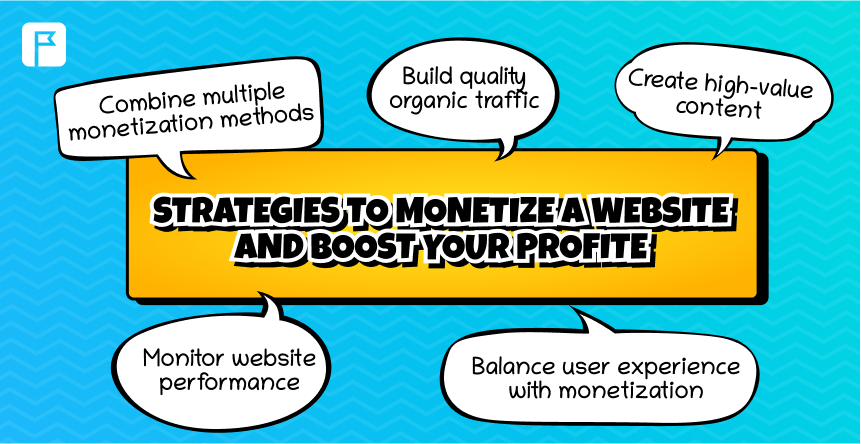
Strategies to Monetize a Website and Boost Your Profit
Once your website meets the bare minimum of not being terrible, you can finally look into actual monetization strategies.
Combine Multiple Monetization Methods
Knowledgeable website owners don’t rely on just one revenue stream. For example, using display ads for general traffic alongside affiliate links in review content, offering both free (ad-supported) and premium (subscription) content tiers, and implementing ad networks while developing your own digital products. This strategy shields you from algorithm changes or market fluctuations that might affect a single monetization channel.
Build Quality Organic Traffic
Sustainable website monetization relies on genuine, engaged visitors. Focus on attracting people interested in your content, strictly avoiding bots or fake traffic.
- Implement keyword research and SEO best practices on your website.
- Maintain direct communication with your target audience via an email list.
- Utilize different social media channels to carry your content to your target audience.
Remember that quality traffic consistently outperforms quantity when it comes to monetization.
Create High-Value Content
Quality content remains the foundation of successful website monetization. Publish regular, valuable articles, videos, or resources that solve problems for your audience. Content that helps people make decisions, learn new skills, or solve problems attracts more engagement and performs better with monetization methods.
Some practical ways to improve content quality:
- Boost user engagement in comment sections and through social sharing. Active communities around your content increase both return visits and time on site.
- Update existing content regularly to keep information current and relevant. Google rewards freshness, especially for topics that change frequently.
- Incorporate helpful visuals like images, charts, or videos to enhance understanding. Stats show that content with relevant images gets 94% more views than content without visuals.
Monitor Website Performance
Regularly track key indicators to optimize your monetization strategy:
- Website load speed (impacts both user experience and ad performance)
- Device compatibility (mobile vs desktop revenue)
- Engagement metrics (time on page, bounce rate, pages per session)
- Revenue by content type, page, and traffic source
Faster, more user-friendly websites retain visitors longer, giving monetization methods more opportunity to work.
Balance User Experience with Monetization
Always consider how monetization elements affect your visitors’ experience. The research data shows that 91% of people find today’s ads more intrusive than a few years ago, making this balance more critical than ever.
Practical implementation tips:
- Ensure sponsored content provides actual value to readers.
- Make subscription processes straightforward with clear explanations of benefits.
- Limit pop-ups, interstitials, and other interruptions, especially on mobile devices where screen space is limited.
- Test different ad placements to find positions that perform well without disrupting reading flow. For example, ads placed after a complete thought or section break feel less intrusive than those that interrupt mid-paragraph.
A real-world example from the research shows that Wait But Why, a popular blog, maintains user experience while monetizing through a store selling branded merchandise related to the blog’s themes rather than covering the content in advertisements.
Natali
HilltopAds Senior Publisher Manager
Using multiple monetization methods from the start is not always the best approach—more does not necessarily mean better.
Overloading users with advertising is a common mistake that can negatively impact their experience. Instead, webmasters should focus on finding the right balance between the amount of advertising on the site and their revenue goals.
Closing Thoughts on How to Monetize a Website in 2026
Website monetization is simply the way website owners make money from their sites. The internet is already overflowing with low-quality websites, and meaningless content written for SEO bots instead of humans. Don’t add to the noise! If you have genuine traffic, quality content, and an understanding of SEO and monetization strategies, there’s no reason you can’t generate a solid income online.
Remember that patience is key–it could take anywhere from three to six months for your monetization efforts to start showing a major return.
Website monetization has never been easier than with HilltopAds. Offering a number of benefits that make it especially useful for website monetization, including:
- Ads come in several different formats to fit different websites and content.
- CPM rates are industry-leading across top 10 GEOs
- Advanced functions, such as auto-optimization and Anti AdBlock solutions
- Payments every week with as little as $20
With these features working together, the platform proves advantageous for publishers because it makes the most money while still caring about users.