


High installs with no real users waste budget and don’t grow your app. This guide shows how to promote a mobile app in 2026, get the right users, and turn installs into real growth.
Both Google Play and App Store get around 1700 apps every day, ranging from games to lifestyle routine apps. If you’re an app developer or an advertiser who just promotes them, then you probably know how steep the competition can be sometimes.
Unfortunately, we’re long past the times of the iPhone 3G, when the App Store was new, and users downloaded everything from it simply out of novelty. Nowadays, even if your app is really good and helpful, you still need a great marketing strategy to truly grab users’ attention, which can be hard to come up with. Hard, but not impossible.
If you have trouble with marketing mobile apps to users, this article is for you. Today, we’ll not only share the best ways to promote mobile apps, but also dive deep into the market itself, analyze the mistakes that can be made during marketing campaigns, and more.
Promote your mobile apps with HilltopAds
attract engaged users, and maximize your return on investment.
What Does It Mean to Promote a Mobile App?
It’s one thing to effectively promote a mobile app, but making users stay and continuously use it is a whole beast of its own. To be successful in this market, you need to know how to attract and retain users through different channels. Let’s look closer at every step of the algorithm:
Choosing the right traffic source
This step is important for affiliate marketing as a whole, not just for promoting mobile apps. If you want a consistent, continuously growing user base, you need to carefully select where to advertise your app.
Testing
Before putting your app on the market, you first need to test it. You can do it yourself, ask your friends and family for help, or go to dedicated platforms where you can recruit users to do the job (for example, you can do it on r/TestersCommunity on Reddit).
Metrics analysis
Here we are talking about both marketing campaign metrics and how well your app performs. The more frequently you check the data, the sooner you’ll know if something needs to be fixed and optimized.
Continuous updates
The first version of your app may be good, but it can only take you so far. You need to regularly roll out updates to further enhance what you already have, introduce new features, and bring quality of life improvements if you want your app to thrive.

Elm
Business Development Manager HilltopAds
One of the biggest misconceptions is that installs = growth. Many advertisers still focus too much on the cheapest CPI, thinking that if they buy enough installs, the campaign will eventually become profitable. In reality, installs are only the first step. What matters is what happens after the install: does the user open the app, register, subscribe, make a purchase, return the next day, or generate revenue?
Let’s take for example two campaigns: A and B.
- Campaign A brings installs at $0.20
- Campaign B at $0.60
At first glance, Campaign A dominates and looks like a go-to option. However, if those users uninstall the appimmediately or never complete onboarding, that traffic is of little-to-no value. Meanwhile, Campaign B may produce fewer installs, but there can be more paying users, better retention, and a lower cost per real action. In other words, high-quality traffic is well worth the increased cost of acquisition.
In general, it’s not the best idea to focus solely on CPI. Instead, track deeper events like registrations, trials, subscriptions, purchases, deposits, or any other action that shows genuine intent. At HilltopAds, we recommend setting up tracking in advance to have an easier time when scaling up. Traffic should be evaluated by quality, not just raw volume.
Also check out our article on how to promote AI tools:
How Mobile App Growth Actually Works
When marketing a mobile app, one of the key things to remember is that users’ behavior is rather unpredictable. If you make them download your app, it doesn’t mean they will use it regularly. Users may instantly delete your mobile app, it might simply sit idle and take up storage on users’ phones, or, in the best case, your app will be actively used.
To avoid the first two scenarios, you need to master the acquisition, engagement, and retention strategy, which will ultimately lead to effective monetization and the successful growth of your mobile app. Let’s say that if you fail to engage new users with your app, it means that all the downloads and traffic went nowhere, rendering them useless.
To put it simply, you want 100 installs with all 100 users active, rather than the same 100 active users with 1,000 downloads.
Register with the best ad network for advertisers HilltopAds
Core Channels to Promote a Mobile App
There are three main groups of channels you can rely on when marketing your mobile app. For the best results, we recommend utilizing all of them:
Organic traffic
Organic traffic refers to cases where users naturally discover your app through search on the App Store and Google Play. Organic traffic is free and reliable for steady, continuous growth, but it can take time for users to notice your app and actively download it.
Paid traffic
This is a much faster channel than organic traffic. Here, you pay for immediate visibility, which increases user acquisition and helps gather crucial data for future app updates faster. However, your mobile app may stagnate in downloads after you stop paying for traffic if it fails to organically attract new users beyond the initial visibility boost.
Various communities
This channel can be considered a combination of organic and paid traffic. You can tell about your mobile app on different forums, pay bloggers and influencers for marketing your app, and after that, wait for when the word of mouth does its job, boosting your mobile app’s popularity.
With marketing channels out of the way, it’s time for us to look at the ad networks you can join to promote your mobile app.
Elm
Business Development Manager HilltopAds
To understand whether a source is profitable, you need to look beyond the install and measure the full user journey. A source is not truly profitable because it gives you many installs. It becomes profitable when the cost of acquiring users is lower than the value those users generate.
The first step is to define the key conversion event. For one app, it may be registration. For another, it may be trial activation, first purchase, subscription, deposit, or in-app engagement. Then you compare the cost of traffic from each source with the value of these actions.
For example, let’s say Source 1 generates 1,000 installs for $200, but only 5 users subscribe. Source 2 generates 400 installs for the same $200, but 25 users subscribe. If you only look at installs, Source 1 looks stronger. But if you look at paying users, Source 2 is clearly more profitable.
A good approach is to analyze each source on several levels:
- CPI – how much each install costs.
- CPA – how much each meaningful action costs.
- Retention – whether users return after the first session.
- Revenue – how much users generate after install.
- ROI – whether the source brings more value than it costs.
In practice, the best results come when advertisers pass postback events back to the ad network. This allows optimization not just for installs, but for users who actually perform valuable actions inside the app.
Also check out our recent article on how to launch successful video campaigns:
Best Ad Networks to Promote a Mobile App
When it comes to choosing an ad network for marketing mobile apps, you have to choose not the most popular platform, but the one that best aligns with your product, budget, and the type of traffic you seek.
HilltopAds
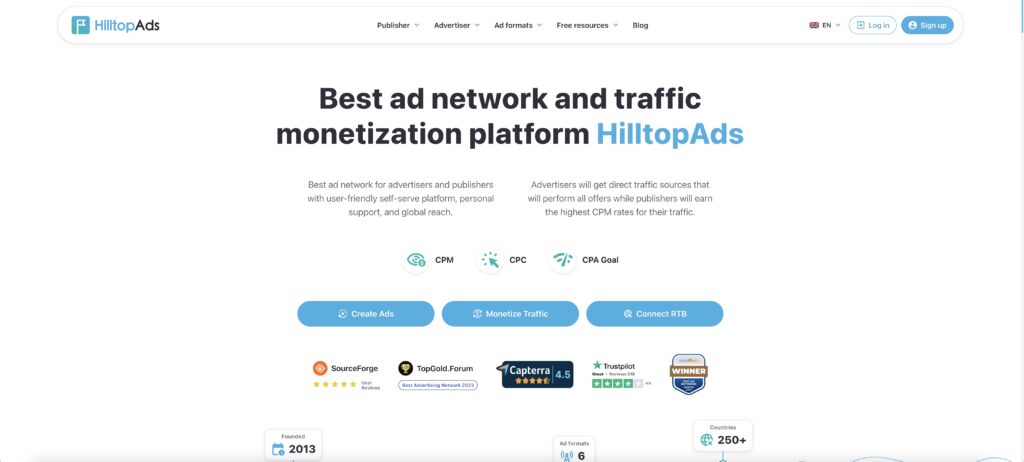
HilltopAds offers mobile advertising solutions designed to deliver the right users to your mobile app through tailored strategies that align with your app’s objectives. Whether you’re looking to promote Android or iOS apps or increase installs, HilltopAds provides advanced targeting and performance optimization to ensure the best results.
The platform specializes in Streaming Dates, Dating, Games, iGaming, E–Commerce, and VPN & PIN-Submit niches, covering all popular and well-known mobile app categories. Also, HilltopAds offers Popunder, In-Page, Video VAST, and Banner ad formats, all of which are perfect options for marketing your mobile app.
Sign up with HilltopAds today
and get high-quality traffic from 250+ countries worldwide.
Unity Ads
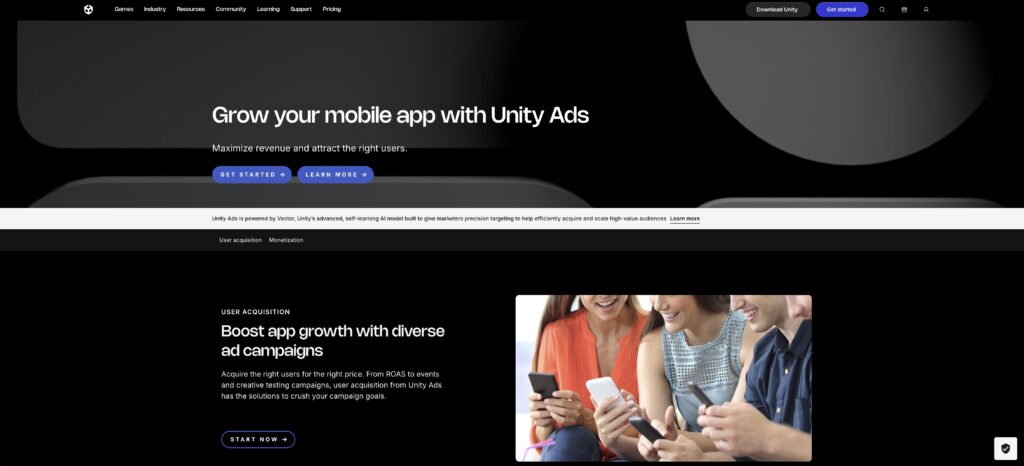
Unity Ads is an advertising network from the creators of one of the most famous game engines and specializes strictly in marketing mobile apps. You can monetize any app with the network, but if you’re strictly a game developer for mobile devices (and even use Unity in your work), then Unity Ads is a no-brainer.
The network provides its users with Rewarded Video, Full-Screen Interstitial, and Banner ad formats and offers various guides to help you successfully monetize your mobile app.
TikTok Ads
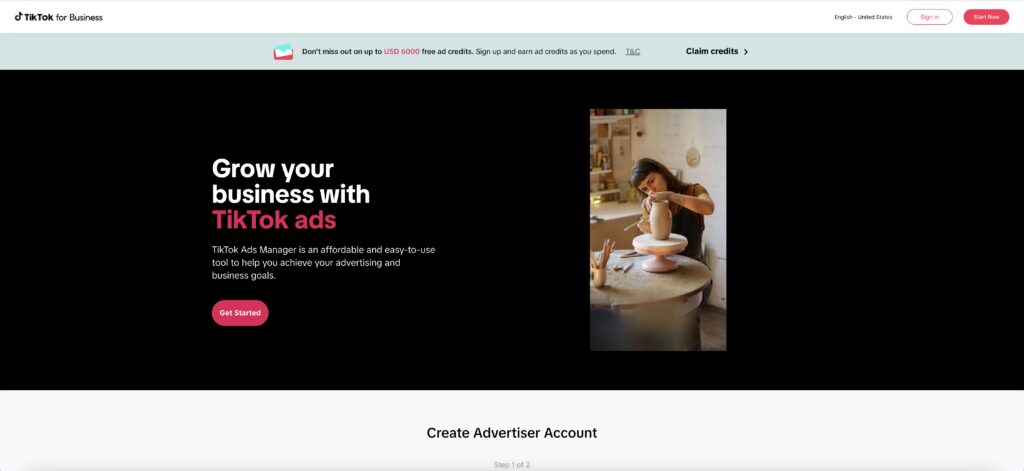
TikTok Ads gives you access to the audience of around 1.99 billion active users globally.
What sets TikTok Ads apart from the rest of the ad networks on this list is its tight integration with the main mobile app. Marketing with TikTok Ads takes the form of short videos that are indistinguishable from regular content in the main app, and given how well recommendations work there, you’ll find your users in no time.
Apple Search Ads
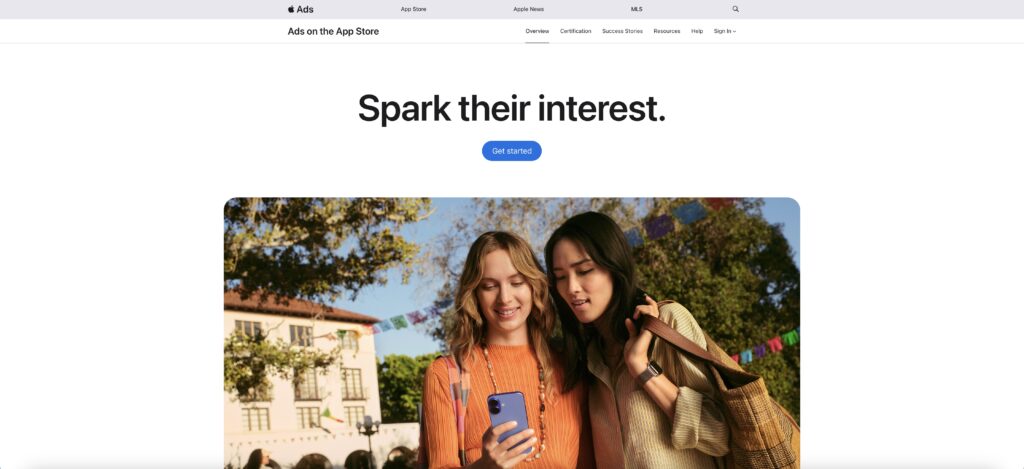
Apple Search Ads is yet another ad network that appeals due to its massive user base. Apple Ads will integrate your mobile app advertising right into Apple’s ecosystem. Users will see ads for your mobile app on the App Store, in Apple News, during MLS matches on Apple TV, and soon on Apple Maps – this is marketing at the next level.
MGID
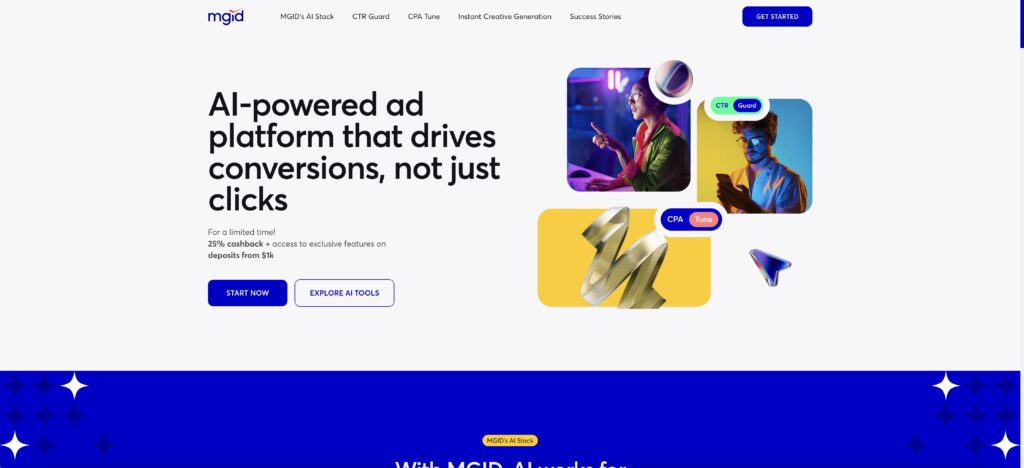
MGID is an AI-powered advertising network that helps boost the performance of your mobile app marketing campaign. MGID’s AI is capable of keeping CTR high and preventing ad fatigue through timely creative updates, optimizing your campaign towards conversions, and providing all users with generative AI tools for creating unique and eye–catching ads for your mobile app.
| Ad Network | Best For | Strongest GEOs | Key Formats | Entry Barrier | Best Use Case |
| HilltopAds | Affiliate apps, iGaming, utilities | Tier-1, Tier-2, LATAM, Asia | Popunder, Video, Banner | Low | Fast testing and scalable paid traffic |
| Unity Ads | Mobile games | Global | Rewarded Video, Interstitial | Medium | Gaming apps and rewarded engagement |
| TikTok Ads | Viral consumer apps | US, Europe, SEA | Native video ads | Medium | Fast user acquisition and awareness |
| Apple Search Ads | iOS apps | iOS-heavy GEOs | Search ads | Medium-High | High-intent App Store users |
| MGID | Content and utility apps | Global | Native ads | Low | Content-driven app promotion |
Why Most App Promotion Fails
Knowing how to promote your mobile app is just half the battle; you also need to know the mistakes that many users make when marketing their mobile apps. So, in this section of the article, we’ll go through the most common reasons why many mobile app marketing campaigns fail.
Downloads with zero retention
If users are installing your app on their mobile devices, then it already has a hook that makes people try it out; all that’s left to do is figure out why the app can’t retain them. Usually, users delete apps from their mobile devices due to excessive ads and notifications, a poor user experience, and simply to free up storage. To ensure the retention of future users, you need to regularly review your app’s data to identify what to update next and conduct frequent surveys of users’ experience.
The traffic isn’t paying off
Usually, the reason behind this is the initial pick of the wrong traffic source. To avoid this, you need to thoroughly evaluate what users can truly benefit from your mobile app.
Scaling up too early
This is a common mistake among beginners in the affiliate marketing industry. The key here is not to rush into things at the first sign of positive results, as it may just be a lucky coincidence. We recommend waiting a bit and assessing how consistent those good results are, and only then scaling up your app marketing campaign.
And as we can see from these reasons, the problem usually lies not in traffic but in the mismatch among its source, the product, and the monetization model.
Elm
Business Development Manager HilltopAds
There are several clear signs that an app is not ready for paid traffic. The first one is missing or has incorrect tracking. If the advertiser cannot see which source, zone, or campaign brings valuable users, then optimization becomes almost impossible. In this case, the budget may be spent, but there will be no clear understanding of what worked and what didn’t.
Another signal is weak onboarding. If users install the app but do not understand what to do next, they leave quickly. Paid traffic can bring people to the app, but it cannot fix a confusing product experience.
For example, if an app requires registration but the sign-up form is too long, has technical issues, or does not clearly explain the value of the app, many users will drop off before completing the first meaningful action. In this case, the problem is not necessarily traffic quality – the app itself needs improvement before scaling.
Other warning signs include:
– No clear monetization model.
– Low retention from organic users.
– Frequent crashes or technical bugs.
– Poor App Store page with weak screenshots or unclear description.
– No defined target action after install.
– No postback setup for key in-app events.
Before launching paid traffic, the advertiser should make sure the app can convert users at least on a basic level. Paid campaigns work best when the app already has a clear funnel: install -> open -> onboarding -> key action -> monetization.
Once this path is working, traffic can be tested, optimized, and scaled much more effectively.
How to Run Your First Profitable Test Campaign
If you’ve never run a marketing campaign before, you’re in luck: in this section, we’ll explain how to run an effective test campaign and give you everything you need.
Small budget. $100–300 should do just fine.
1–2 GEO. For example, the US and Canada.
One traffic type. Let’s focus on paid traffic.
A handful of creatives. During this step, our main goal is to test our hypothesis, not to make a profit. So, create a couple of different creatives to see which idea better attracts users to your app.
When it comes to the test marketing campaign, to ensure that everything runs smoothly, you need to keep an eye on CPI (Cost Per Install), users’ behavior, and base retention. If you want to learn more, you can check out HilltopAds’ guide on marketing on our YouTube channel.
And final piece of advice for today: if you haven’t yet picked an ad network from this article, you can join HilltopAds. We’re a beginner-friendly platform, so if you have trouble with test marketing campaigns or anything else, just write to us, and our managers will definitely help you.
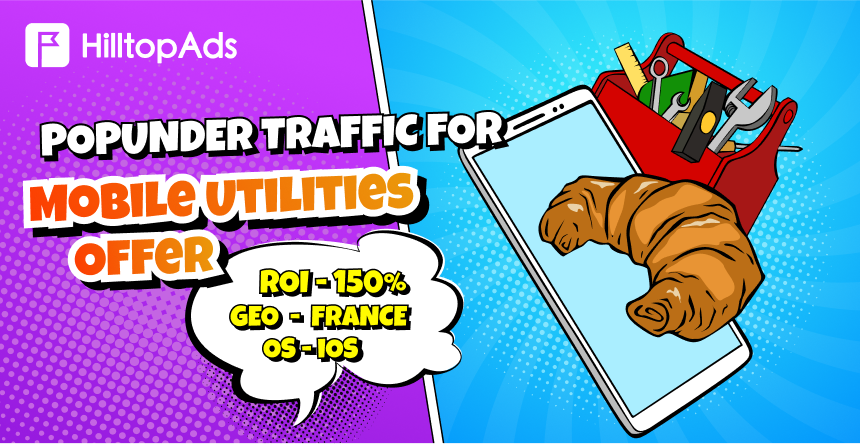
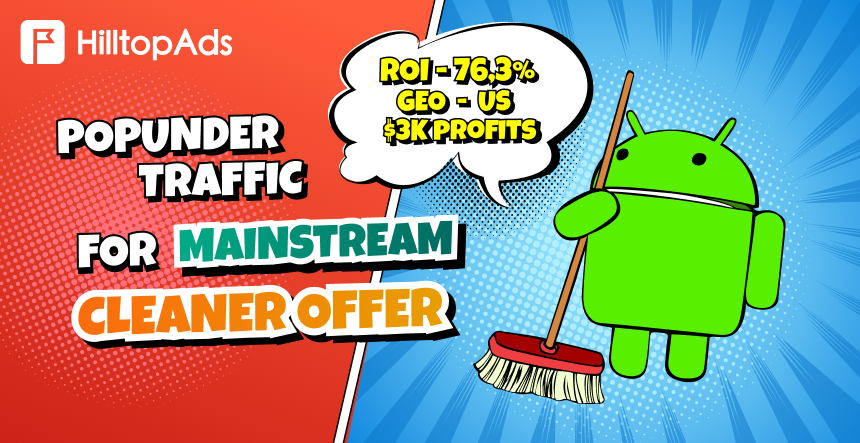
We recommend checking out successful case studies on promoting mobile apps with HilltopAds:
Conclusion
It’s hard to attract and especially retain users in your mobile app, but as we said at the beginning, hard doesn’t mean impossible. Today, we learned that the key to running a successful mobile app is to regularly analyze data so you know which updates to roll out that will not only engage your existing audience but also consistently bring new users to your app.
Besides that, please remember that the number of active users in your app is far more vital than the number of downloads (even though downloads are important too), because those are the users who will help you monetize your work, and the more you have, the better.
And if you’re new to marketing mobile apps or affiliate marketing in general, you’re welcome to join HilltopAds, an ad network perfect for pushing your app to the top!
FAQ About Mobile App Promotion
In this section, you can find some popular questions regarding mobile app marketing and answers to them.