


The same self-serve ad platform can bring one advertiser profit and leave another with empty stats and wasted spend – the difference comes down to targeting, tracking, and testing strategy. This guide breaks down how to choose the right traffic sources, avoid costly setup mistakes, and turn self-serve campaigns into scalable results.
Self-serve advertising platforms have been a staple of the affiliate marketing industry for a long time, and things aren’t changing even in 2026. Almost every ad network today is a self-serve platform, making their counterparts, managed (or full–serve) ad platforms a rare sight and primarily a choice of big brands with large budgets.
However, despite the freedom that self-serve ad platforms offer, many advertisers still encounter the problem of their campaigns turning into black holes that suck their budgets dry rather than prosperous revenue streams. If you’re one of those advertisers, your troubles are finally over. In this article, we’ll explain how to use self-serve platform capabilities to the fullest in your ad campaigns and go through the best examples of self-serve platforms and their benefits.
Register with the best ad network for advertisers HilltopAds
What Are Self-Serve Ad Platforms?
Before proceeding, let’s make sure we’re on the same page about self–serve platforms. Self-serve ad platforms are advertising networks that offer a wide range of tools and features to help advertisers effectively launch and manage their ad campaigns and successfully reach the target audience without the intervention of a third party.
Self–serve ad platforms are convenient for advertisers because of their flexibility, but this business model is also beneficial to ad networks. The shift to the self–serve operational model allowed ad networks to scale, reduce costs, and last but not least, meet advertisers’ demand for transparency and control over marketing campaigns. So, self–serve platforms are a win–win for everyone.

Helena
Senior Sales Manager HilltopAds
One of the most common signs of inefficient work with a self-service platform is launching campaigns without proper tracking and without understanding the full targeting requirements of the offer. Advertisers often skip postback setup, which makes it difficult to optimize campaigns based on real conversion data. Another common issue is using overly broad targeting. Without a clear understanding of the audience, campaigns start spending budget on traffic that is unlikely to convert.
Read our article on the best ad networks for buying traffic to your website:
Pros&Cons of Self-Serve Ad Platforms
As we’ve already stated numerous times, the main selling point of self-serve ad platforms is the freedom to do what you want with your campaigns, but it’s not the only one. In this section of the article, let’s go through all the advantages that self–serve ad platforms have:
Control
You have complete control over your ad campaigns. Self-serve ad networks are, in a sense, like a luxury buffet; the platform gives you many options, but only you decide what will be on your plate.
Speed
Self-serve ad platforms allow you to instantly jump straight into business and quickly launch your marketing campaigns.
Flexibility
With flexible settings, you can test and realize all your ideas without issue and see what works best, so you can later use them in your ad campaigns.
Independence
There’s no third party that will tell you what to do and how to run your campaigns; all the decisions are your own.
However, all this autonomy comes at a price, and self–serve ad platforms have their disadvantages:
Requires expertise
To have successful campaigns on self-serve ad platforms, you need a lot of technical know–how, and depending on the platform (some are beginner–friendly, while others are oriented towards professional advertisers), it may take time to learn all the necessary skills.
Risk of budget loss
This one is tied to the previous con: if you don’t know what you’re doing when running your ad campaigns, you risk wasting your entire budget.
High competition
There’s a high level of competition within the self–serve ad platforms, so if you want to rise and stay on top, you need to be faster than your opponents and be the first to pick the best offers and ad places.
Basically, all the cons that self–serve ad platforms have are in one way or another tied to the fact that the advertiser may not have the necessary knowledge on how to run campaigns, but if you have been in the business for a while, then there’s no problem. Or, if you’re new to affiliate marketing, then there are lots of beginner–friendly self–serve ad platforms with managers and support teams who are always ready to help.
Helena
Senior Sales Manager HilltopAds
Most advertisers lose money during the testing stage, usually because campaigns are launched too broadly and without proper optimization tools. A missing postback setup is one of the main problems, since advertisers cannot accurately track which traffic sources perform well. Budget losses also become more noticeable when campaigns run without limits or without proper testing. It helps to set smaller test budgets at the outset, run A/B tests on creatives and landing pages, and adjust targeting more precisely, including language settings, OS versions, and other audience parameters.
Check out our recent article on how to increase conversions in your advertising campaigns:

Top Self-Serve Ad Platforms
In this section, we’ll go through some of the best self-serve ad platforms and tell what type of traffic they have, their stronger sides, and when to use them.
| Platform | Main Traffic Sources | Main Ad Formats | Audience Reach | Minimum Deposit / Entry | Best For | Key Strengths |
| HilltopAds | Mainstream + non-mainstream traffic | Popunder, In-Page, Banner, VAST Video | 273B+ monthly impressions, 250+ GEOs | $100 | iGaming, Dating, Utilites, eCommerce | High-volume traffic, anti-fraud protection, fast optimization |
| Google Ads | Google Search, YouTube, Gmail, Maps, Display Network | Search, Display, Video, Shopping, App Campaigns | Billions of daily users globally | Flexible budget, no fixed minimum | Lead gen, eCommerce, SaaS, branding | Highest intent traffic + advanced targeting |
| Meta Ads | Facebook, Instagram, Messenger, Threads | Feed Ads, Stories, Reels, Video, Carousel | 3B+ monthly active users across Meta ecosystem | Flexible budget | eCommerce, lead gen, app installs | Precise audience segmentation |
| TikTok Ads | TikTok feed and discovery traffic | In-Feed Video, Spark Ads, TopView, Branded Content | 1.9B+ global users | Flexible budget | Viral products, mobile apps, Gen Z targeting | High engagement and viral reach |
| PropellerAds | Push and pop traffic worldwide | Push, In-Page Push, Popunder, Interstitial | 12B+ daily impressions | ~$100 | Sweepstakes, finance, utilities, mass-market CPA | AI automation + massive scale |
| RichAds | Push-focused global traffic | Push, In-Page Push, Native, Pop, Direct Click | 5B+ daily impressions, 220+ GEOs | $150–250 | Gambling, betting, VPN, dating | Fast testing and optimization tools |
| Taboola | Premium publisher websites | Native ads, recommendation widgets, video | 600M+ daily active users across publisher network | Usually manager-approved budgets | Content marketing, editorial funnels, brand awareness | Strong native engagement |
| MGID (if needed as alternative native source) | Content and publisher traffic | Native, recommendation widgets, in-feed ads | 100K+ ad requests/sec | Custom | Blogs, reviews, editorial traffic | AI-powered native optimization |
HilltopAds
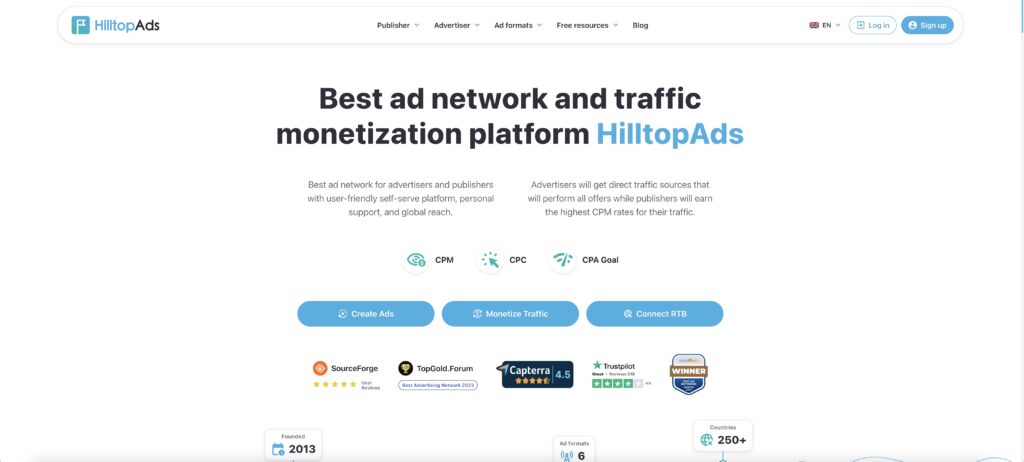
HilltopAds provides high-quality, bot-free traffic from both mainstream and non-mainstream sources worldwide. The platform supports popular formats such as Popunder, In-Page, Banner and Video, and is known for its Ad Safety solutions, fast weekly payments, responsive support team, and 273+ billion monthly impressions. HilltopAds works especially well for high-volume performance campaigns, including mobile app offers, and is often chosen by advertisers who need to launch and optimize campaigns quickly.
Sign up for HilltopAds today
and get access to high-quality traffic from 250+ countries worldwide
Google Ads
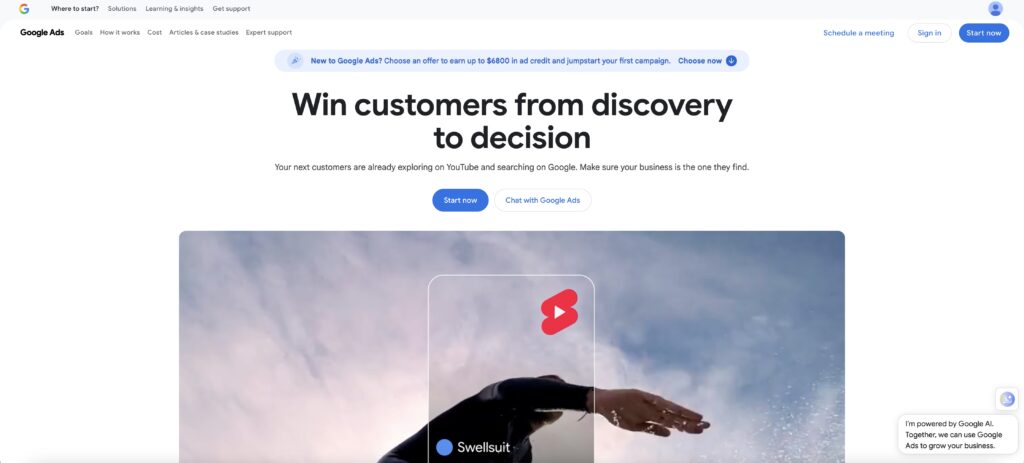
Google Ads gives advertisers access to traffic across Google’s entire ecosystem, including Search, Maps, Shopping, YouTube, Gmail, Blogger, and thousands of partner websites in the Display Network. One of the platform’s main advantages is the ability to combine massive global reach with high-intent targeting based on real-time user behavior and search activity. Google Ads works especially well for campaigns focused on immediate visibility, qualified lead generation, product promotion, and large-scale brand awareness across broad audiences.
Meta Ads
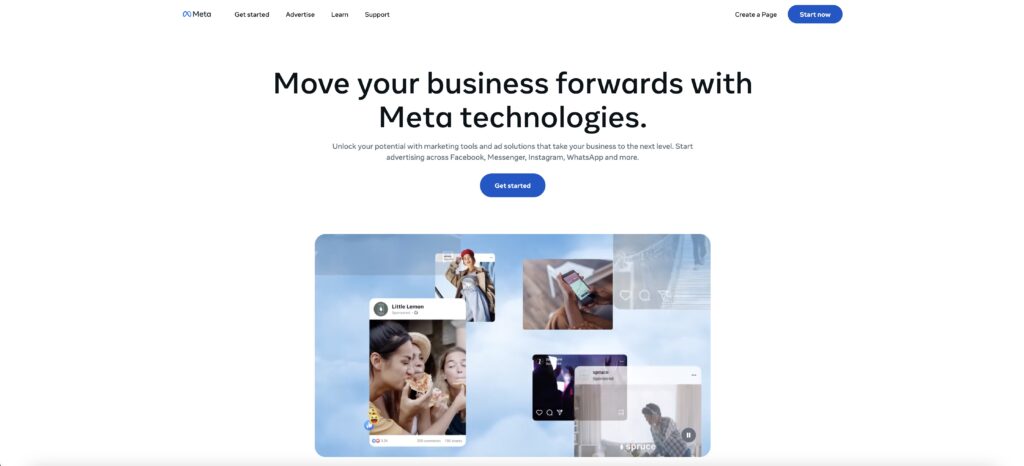
Meta Ads provides highly targeted traffic across platforms like Facebook, Instagram, and Threads, allowing advertisers to reach users based on detailed interests, demographics, online behavior, and purchase intent. The platform is widely used for campaigns that depend on precise audience segmentation, broad reach, and strong engagement, making it a popular choice for lead generation, eCommerce promotion, app installs, and brand awareness campaigns.
TikTok Ads
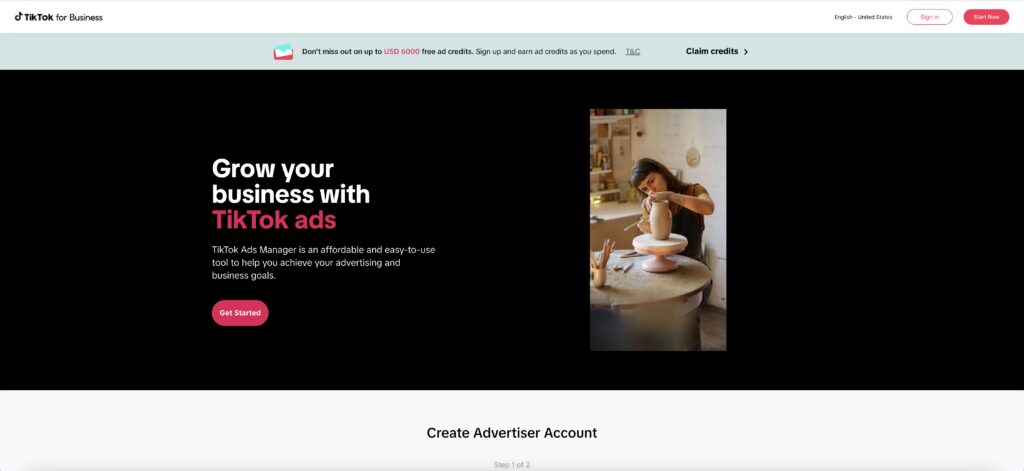
TikTok Ads focuses on high-volume, engagement-driven traffic built around short-form video content and native-style ad placements that blend into the user feed. The platform is especially strong for product discovery, viral campaigns, and brand visibility, making it a popular choice for advertisers targeting younger audiences such as Gen Z and Millennials who actively engage with mobile-first content and social trends.
PropellerAds
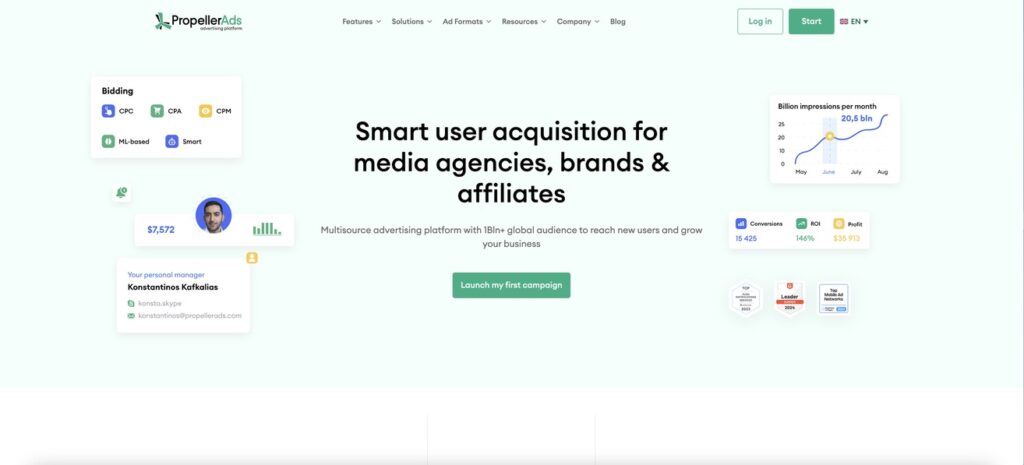
PropellerAds provides high-volume global traffic with a strong focus on automation and performance-driven campaigns. The platform is known for formats such as Push, In-Page Push, and Popunder, along with AI-based optimization tools that help advertisers manage and scale campaigns more efficiently. PropellerAds is commonly used for cost-effective traffic acquisition in performance marketing, especially for campaigns that rely on large volumes, fast testing, and broad GEO coverage.
RichAds
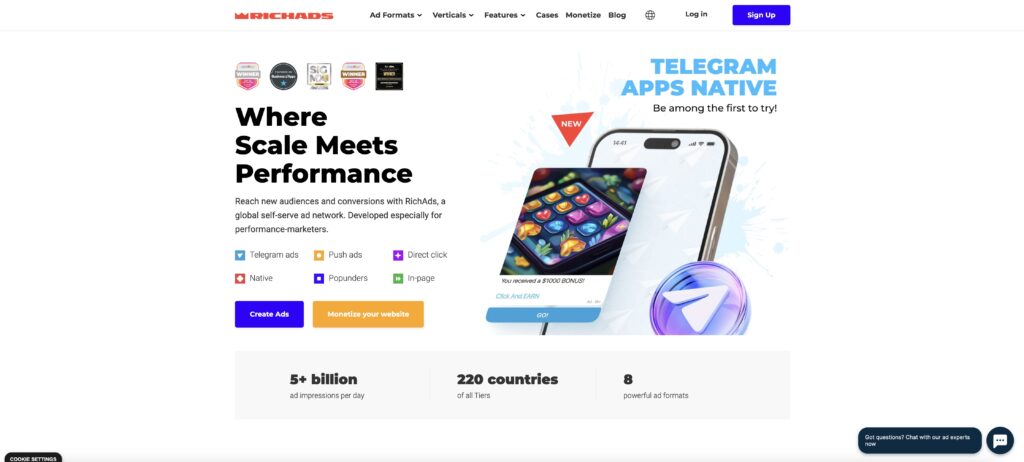
RichAds is a self-serve ad network that delivers traffic worldwide and is primarily known for its large push traffic volumes, AI-driven optimization tools, and responsive support team. The platform is widely used for performance campaigns that require fast testing, automation, and broad GEO coverage, especially in verticals such as Gambling, Betting, Finance, Dating, Antivirus, VPN, Nutra, and Sweepstakes.
Taboola
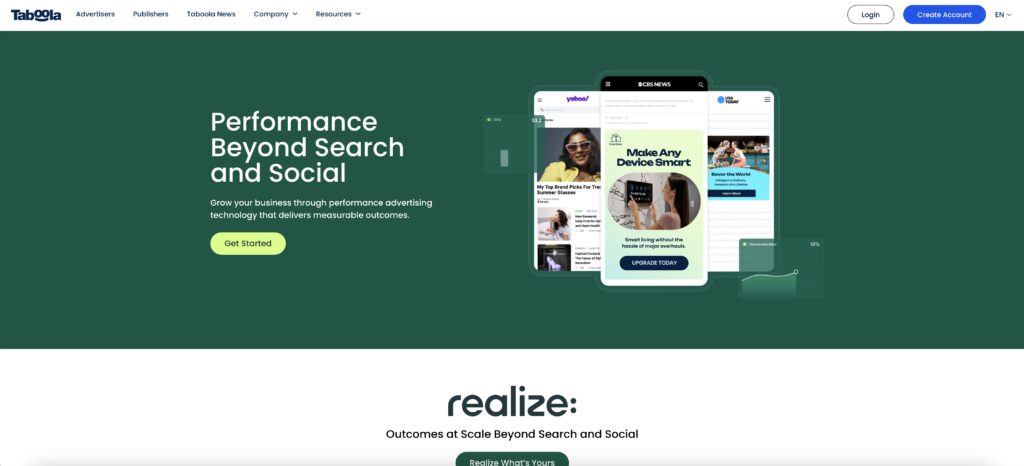
Taboola delivers native, interest-based traffic through a large network of top-tier publisher websites, helping advertisers reach users while they browse articles, news, and recommended content. The platform is especially effective for content-driven campaigns focused on visibility and engagement, including articles, guides, videos, and long-form editorial content that benefits from large-scale audience discovery and native ad placement.
How to Choose the Right Self-Serve Ad Platform and Launch Your First Campaign
When presenting you with various self–serve platforms, we listed the cases where you can use them for a reason, as you need to choose the ad network not based on its popularity, but depending on your goal (whether it’s leads, traffic, or downloads), type of offer, and your budget.
And before we end this article, we want to share with you a quick plan on how to launch your first campaign successfully:
- Pick a self–serve platform based on the criteria we listed above.
- Set your budget. $100–300 will do just fine for the first time.
- Pick 1 or 2 ad formats for testing. This way, your start may be small and slow, but steady, which will help you greatly in the future.
- When running the campaign, keep an eye on Cost Per Result (CPR), user behavior, and first-engagement signals.
When launching the first campaign, your primary goal is not to make money, but to test your ideas and see what really works in real life.
Finally, please remember that running campaigns with self–serve ad platforms isn’t a one–and–done process; it’s a continuous cycle of testing hypotheses and analyzing data to optimize campaigns for better results.
Helena
Senior Sales Manager HilltopAds
In most cases, advertisers get better results when working together with a personal account manager. A manager can help adjust campaign settings based on the specific vertical, GEO, ad format, and level of competition. This is especially useful during launch and optimization, when small changes in targeting or bid strategy can significantly affect performance.
We recommend checking out case studies from advertisers using the HilltopAds self-serve platform:

Conclusion
Self-serve ad platforms are a modern industry standard for good reason: they are flexible and give advertisers full control over their campaigns. But this DIY experience comes at the cost of deep understanding and regular testing.
But if you’re a beginner and don’t have certain knowledge, it doesn’t mean you should ditch the idea of joining an ad network, as many platforms, like HilltopAds, have a team of managers who are always ready to help you rise to the top. Join today and see for yourself!
FAQ About Self-Serve Ad Platforms
In this section, you can find some popular questions regarding self–serve ad platforms and answers to them.