


Your offer isn’t converting – but is the offer really the problem, or are you simply buying the wrong traffic? See how the main affiliate traffic sources differ in intent, cost, and scaling potential, and learn how to choose the right one for your campaign in 2026.
There is no traffic source that works equally well for every affiliate offer. SEO helps attract users who have already been searching for the product, while TikTok can help reach out to colder audiences who have never thought of buying it. Search ads allow you to tap into existing demand fast, while Popunder provides a much wider audience for testing your offer against.
Need more traffic, new GEOs, or room to scale?
Sign up with HilltopAds and find the right audience for your offer.
All these sources vary by cost, the speed of acquiring traffic, and scaling opportunities. The user intent they address also differs. Thus, the optimal traffic source is one that can bring the right type of user at a cost the offer can support.
This guide covers the main organic and paid sources available to affiliate marketers in 2026. It also sheds light on where ad networks fit when you need more volume, another GEO, or a new way to test a funnel.
Best Traffic Sources for Affiliate Marketing in 2026
Affiliate traffic may come either organically or from paid sources. With organic traffic, attention is often earned through content, search visibility, or being active in the community. There is no direct charge for every visit (although producing the content and building distribution still costs time and money).
Paid traffic assumes that you buy access to an audience. The benefit is speed: a campaign can start collecting data shortly after launch, and spending can be increased if the numbers work.
Here are the main options worth considering in 2026.
| Traffic Source | How Affiliates Use It | Key Strength | Platforms & Examples |
| Organic Search (SEO) | Create reviews, comparisons, guides, and other content around relevant search queries | Captures users already researching a problem, product, or solution and can generate traffic over time | Google, Bing |
| Organic Social & Video | Publish short-form videos, reviews, tutorials, and product-focused content to attract audiences organically | Helps affiliates build discovery, engagement, and trust without paying for every visit | YouTube, TikTok, Instagram, Pinterest, Facebook |
| Communities & Forums | Participate in niche discussions, answer questions, and share useful information around relevant problems | Reaches users who are actively discussing problems, comparing options, or looking for recommendations | Reddit, Quora, niche forums |
| Paid Search | Target commercial and transactional search queries with paid ads | Captures existing demand when users are actively searching for a product or solution | Google Ads, Microsoft Advertising |
| Paid Social | Use creatives and audience targeting to generate interest and drive users into an affiliate funnel | Provides broad reach and enables fast testing of creatives and audience segments | Meta Ads, TikTok Ads, Pinterest Ads |
| Native Advertising | Use content-style ads to drive users to advertorials, reviews, pre-landers, or offers | Fits content-led funnels where users need more context before converting | Taboola, Outbrain, MGID |
| Ad Networks | Buy publisher traffic through formats such as pop, push, display, video, and direct traffic | Provides access to additional inventory, GEOs, and ad formats for testing, diversification, and scaling | HilltopAds, PopCash, Kadam, RichAds |
Register with the best ad network for advertisers HilltopAds
Read our recent article:
Organic Search
SEO makes the most sense when people already search for the product or solution for their specific problem. Affiliates promoting hosting, software, financial products, consumer electronics, or similar products often build content around queries like comparisons, alternatives, pricing, reviews, and “how to” searches. Traffic may arrive months after the content is published, so successful pages keep producing visits without buying each click.
The main downside is that SEO takes time. Publishing content does not mean traffic will follow right away, even if you have already built out several pages around the topic.
It also needs regular attention. Rankings can change, older pages need updates, and new content, links, and broader topical coverage are usually part of keeping organic traffic growing.
SEO as a source is therefore better suited to affiliates building an asset than to someone who needs to validate a new offer by Friday.
Organic Social and Video
With social platforms, users do not necessarily open TikTok, Instagram, or YouTube planning to research your offer. However, a good piece of content can create that interest.
This is particularly useful for products that benefit from demonstration. Beauty, fitness, consumer products, apps, courses, gadgets, and visually understandable services all give creators something concrete to show rather than simply describe. Video also gives an affiliate campaign room to answer objections before the click.
The difficult part is consistency. Organic distribution can be volatile, and a format that performs on YouTube may need to be rebuilt rather than reposted unchanged for TikTok or Reels.
Communities and Forums
Communities like Reddit, Quora, niche forums, Discord servers, and Telegram groups differ from most other sources in how people use them. Users visit these resources when they have something specific in mind or want to get some recommendations.
Note that most communities do not respond well to accounts that show up only to post affiliate links. Some even ban such behavior outright. Thus, it’s best to join the discussion and add some useful context first. Once you’ve been active for a while, including a link may be appropriate (as long as it fits naturally and the rules allow it).
Volume is usually lower than with major paid platforms. Relevance, however, can be much higher.
Paid Search
Paid search puts the advertiser close to existing demand. If somebody searches for a specific software category, service, product comparison, or solution, much of the qualification has already happened before the click. That makes search attractive for offers where a conversion can support relatively expensive traffic.
The same advantage creates its main problem: competition. Commercial keywords can become too expensive for an affiliate payout, particularly where the advertiser itself, large comparison sites, and other affiliates are bidding on the same demand.
Brand bidding and direct linking may also be restricted by the affiliate program. Those rules need to be checked before the campaign, not after the first conversions arrive.
Paid Social
Paid social is less dependent on users actively searching for something, as the creative does much of the work. It identifies a problem, creates curiosity, demonstrates a product, or gives the user another reason to leave the feed.
Meta and TikTok are useful when you need reach beyond existing search demand. In addition, they allow you to test different hooks or angles to see what works.
The downside is that performance changes quickly. Creatives burn out, the market gets saturated, and ads may get rejected under platform rules. Even a successful campaign will require fresh creatives and tweaking over time.
Native Advertising
When it comes to native ads, it often helps to include an additional step between the ad and the offer. Rather than taking the customer to the last stage, affiliates may use elements like an advertorial, comparison, quiz, review, or some other type of pre-lander. Such an approach allows you to explain the product better and add useful context, so that users can make informed choices.
At the same time, the additional funnel step creates another place for performance to break. Landing-page engagement and downstream conversions therefore matter as much as the ad itself.
Ad Networks
An ad network gives affiliates access to inventory across many publishers (as opposed to only one search engine or social platform). Platforms like HilltopAds currently let advertisers run Popunder, In-Page Push, Banner, and VAST video campaigns, among others. The exact formats depend on the network.
This variety creates a different testing environment from paid search or paid social. Instead of relying primarily on keywords or social profiles, buyers can work with publisher traffic, placements, GEOs, devices, and traffic segments. Affiliates find it useful when testing another GEO or format, finding volume outside the largest platforms, or adding a second source after a funnel has already proved it can convert.

Register with HilltopAds and get:
- Advanced targeting options
- Direct traffic sources
- Self-serve platform
- Fully-managed service
- Postback tracking
What Makes a Traffic Source Best for Affiliate Marketing
The best traffic source is not necessarily the one with the lowest CPC, the largest reach, or the highest CTR. The six factors below can be more significant.
User intent
Start with what the user was doing immediately before seeing your offer. A Google user searching “best accounting software for freelancers” has already expressed a need. Someone seeing a finance product in a social feed has not. Popunder traffic may be broader still, so the landing page has to do more qualification.
None of those users is inherently better. They enter the funnel at different points.
Cost
Traffic cost only makes sense next to the value of the conversion. An $80 CPA may be excellent for an offer paying $150 and impossible for one paying $25. Likewise, a very low CPM is not useful if the resulting traffic never progresses past the landing page.
Work backward from the payout and acceptable acquisition cost rather than choosing a source because its clicks appear cheap.
Targeting
Ask how closely the source lets you reach the actual market for the offer. GEO is only the beginning. Device, OS, language, placement, keyword, interest, time of day, and other targeting options can determine whether the campaign reaches likely buyers or simply buys a lot of impressions.
The targeting available also has to match what you know. Narrow controls do not help much if there is no data yet telling you which segments deserve to be excluded.
Conversion potential
A source should be evaluated against the conversion you need. Some traffic is good at generating clicks. Some is good at getting users to read an advertorial. Another segment may produce fewer visits but more registrations, deposits, purchases, or qualified leads.
CTR therefore cannot settle the question on its own. Follow the funnel far enough to see the action that actually pays.
Scalability
A good test only means something if there is room to grow from it. Before adding more budget, check whether the source can give you more traffic from similar placements, audiences, GEOs, devices, or other segments that are already working.
Be prepared to see the numbers change when scaling. As you move beyond the strongest inventory, CPA may rise even if the campaign itself stays the same.
Restrictions
Every traffic source has rules that market participants need to respect. Mainstream platforms can restrict verticals, creatives, claims, landing pages, tracking methods, or affiliate promotion itself. Affiliate programs may impose another set of conditions on brand bidding, paid search, incentives, or specific GEOs.
Check both sides before building the campaign. A traffic source is not a practical option if the offer cannot legally or contractually run there.

Elm
Business Development Manager HilltopAds
The biggest risk is expecting a new traffic source to deliver the same results as an already optimized campaign on another network. That can lead to the wrong conclusion after a test that was too short or poorly set up.
Many advertisers launch a test with the same settings they used before. After seeing a high CPA or weak ROI soon after launch, they decide that the source does not work.
Often, the problem is not the network itself. The campaign itself has not yet been adapted to the new traffic, and optimization is not finished.
Note that cheap or high-volume traffic is not necessarily the best. Experienced buyers judge sources by their ability to bring in conversions at a cost acceptable for a given offer.
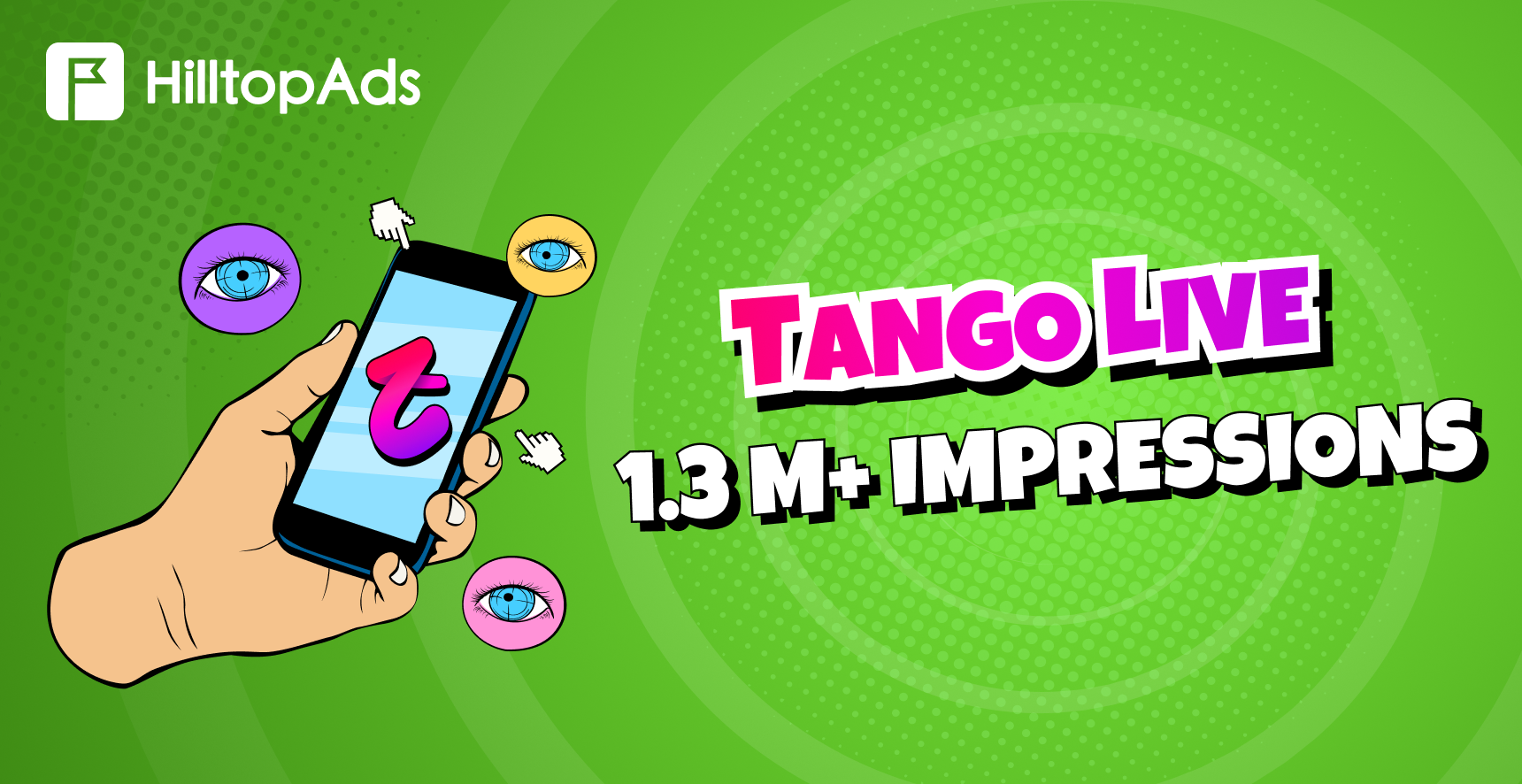
Read also the successful case of our advertiser to promote the Tango Live offer:
Organic vs. Paid Traffic: Which Is Better for Affiliate Marketing
When deciding between organic traffic and paid sources, you need to understand how the tasks they solve differ. Organic is attractive when you can invest ahead of the return. One strong search page or YouTube video may continue to send visitors long after publication.
However, when waiting several months for that traffic is not an option, paid acquisition might make more sense. This way, you can collect data, cut weak segments, change the landing page, and run another variation while the offer is still relevant.
The two can also work together. Paid traffic can validate an angle before a larger content project is built around it, while organic traffic can reduce dependence on media spend once the affiliate business has enough content and authority.
| Factor | Organic Traffic | Paid Traffic |
| Cost | No direct cost per click, but requires time and resources | Requires an advertising budget |
| Speed | Slow to build and gain consistent traffic | Traffic can start almost immediately after launch |
| Scalability | Depends on rankings, reach, content output, and platform algorithms | Can often be scaled by increasing budget and expanding targeting |
| Control | Limited control over traffic volume and distribution | Greater control over targeting, budget, placements, and volume |
| Testing speed | Slower – collecting enough traffic and conversion data takes time | Faster – campaigns can generate data soon after launch |
| Main investment | Time, content, SEO, audience building | Budget, creatives, targeting, campaign optimization |
Where Ad Networks Fit Into Affiliate Marketing
Along with Google, Meta, SEO, and social media channels, media buyers often use ad networks. Suppose an offer already converts on paid social but the campaign is running into audience saturation. Another source gives the buyer a fresh inventory pool. Or perhaps the offer works in one country, and the next task is testing several Tier 2 or Tier 3 GEOs without building a new organic audience in every market.
Ad networks like HilltopAds are useful for that kind of expansion because they combine inventory from many publishers and expose it through one buying platform. Among the opportunities the network provides are:
Diverse formats
It currently offers Popunder, In-Page, Banner, and VAST video formats. Popunder is especially useful when the objective is to collect a meaningful traffic sample quickly, and a CPA Goal optimization option also comes in handy. HilltopAds itself positions Pops as a format for broad reach and scaling, while In-Page, Banner, and Video serve different points between visibility, engagement, and creative depth.
Targeting options
Campaign setup includes device selection, scheduling, and different pricing or optimization models. That gives media buyers several ways to separate their tests.
Campaign monitoring and optimization
Two placements inside the same source can behave very differently. One may convert consistently while another produces clicks or visits without useful post-click activity. Tracking at placement/source level makes it possible to separate them rather than judging the whole network from an average.
Ad networks do not have to replace your existing sources of paid traffic. Often, they are used in parallel with your current setup, allowing you to test new GEOs or formats and scale best-performing combinations.

Roman
Business Development Manager at HilltopAds
The only way to understand whether the issue lies in the traffic source rather than the offer is through data and comparison, not assumptions. An offer should be tested across multiple traffic sources, and each source should be tested with different offers.
If an offer has already shown conversions either in your campaigns or across the market, but fails to perform on a specific source, it’s a strong indication that the problem is with the traffic quality or type.
It’s also important to analyze user behavior. If CTR is solid and your creatives are generating clicks, but users don’t take any further action, the audience is likely not relevant. This is usually reflected in metrics like an 80–90%+ bounce rate, 1–3 seconds on page, and no micro-conversions. If users click but don’t engage at all, in most cases the issue is the traffic, not the offer.
This is a much safer way to optimize than pausing a source because the first CPA looks worse than a campaign that has already had weeks of exclusions, creative testing, and bid adjustments.
We also recommend checking out some of our advertisers’ successful case studies:
Key Takeaways
There is no universal best traffic source for affiliate marketing. The right choice depends on the offer, audience, GEO, budget, funnel, and the action you need the user to complete.
If users are already looking for the product or solution, SEO and paid search give you access to existing intent. Social and video become more useful when the campaign needs to create interest or demonstrate the product first.
Organic channels often fall short in terms of speed, but they may compensate for that with continuing traffic that does not require you to pay for every visit. Paid channels, in turn, buy speed, data, and more direct control over testing.
Native advertising is worth considering when the offer needs a content-led funnel rather than a jump from ad to checkout. Ad networks become particularly useful when you need additional traffic volume, different formats, new GEOs, diversification, or another source for a campaign that has already shown potential elsewhere.
Whichever route you choose, evaluate the source on conversions and campaign economics. Cheap impressions, high CTR, or a large traffic estimate are intermediate numbers.