


Paid ads bring in customers, but if they never buy again, you’re stuck paying for every sale. Discover six ways to turn paid traffic into repeat customers, increase customer lifetime value, and find out when retention isn’t worth the cost.
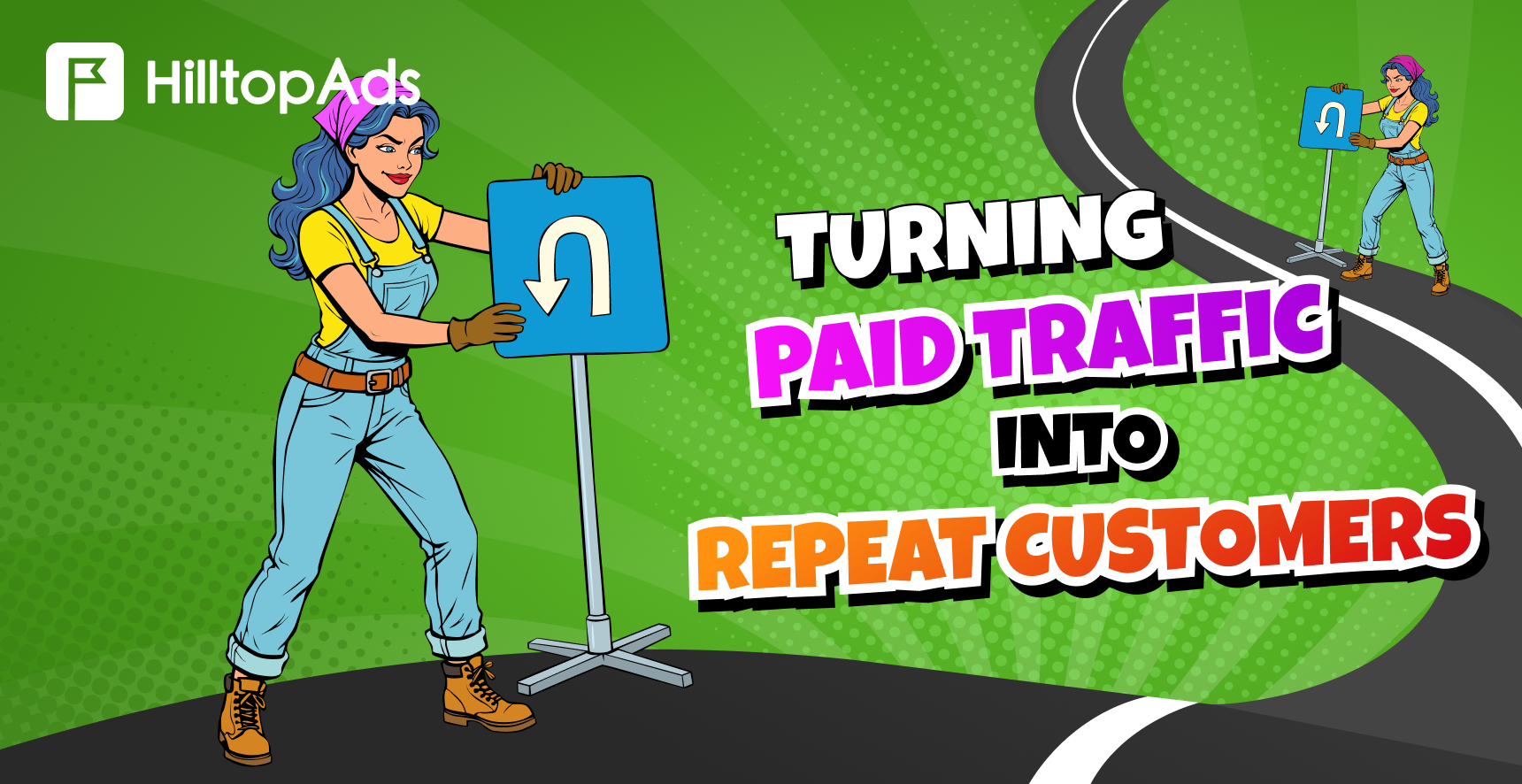
A paid campaign can bring in new buyers every day and still leave a business dependent on its next advertising budget. The first order pays for the opportunity to win a customer. But whether that customer comes back depends on what happens after the conversion.
To ensure that your advertising efforts pay off, simply increasing the number of first conversions is not enough. It makes sense to create the conditions when customers need the product again and returning them is affordable.
Below, we’ll follow the customer from ad click to repeat purchase, then look at six ways to improve that journey. We’ll also cover cases where retention isn’t worth pursuing.
Join HilltopAds to attract the right customers
with quality traffic, precise targeting, and smarter ad spending.
How to Build a Paid Traffic Retention Funnel
The path from the first advertising click to a returning customer can be divided into five stages:
Paid Traffic
The campaign brings in visitors who are interested in the product and can reasonably be expected to buy it. The ad should match what the store actually offers.
First Conversion
After clicking the ad, shoppers should recognize the offer on the landing page and have no trouble checking the price, delivery terms, or available payment methods. Unexpected charges and unnecessary checkout steps can easily spoil that first experience.
Post-Purchase Engagement
Staying in touch after the order gives the store a chance to help customers with their purchases. This could mean sending delivery updates, explaining how to use the product, or answering questions that come up once it arrives.
Repeat Purchase
Someone who regularly buys pet food may appreciate a reminder when their previous supply is running low. Including a link to the same product makes reordering easier, especially if the customer was happy with the first purchase.
Customer Loyalty
After several orders that went smoothly, customers may get into the habit of returning to the same store. They already know what to expect and don’t need to be reached through another paid campaign whenever they want to buy something.
Of course, the buying cycle differs across products. Some items need replenishing within weeks, whereas a software subscription may renew only once a year. Even customers buying the same product won’t necessarily return at the same intervals.
The original traffic source and campaign ID are worth keeping in the customer’s first order record, rather than relying only on the initial conversion report. If later purchases can be linked to that customer in your CRM or analytics system, you can see which campaigns bring in occasional shoppers and which ones attract buyers who come back.
Discover our latest update – HilltopAds MCP:

Elm
Business Development Manager at HilltopAds
At HilltopAds, we give advertisers tools to look beyond the cost of the first conversion. With S2S Postback, they can track additional events such as deposits, purchases, and renewals to get a better idea of which traffic sources bring in valuable customers.
Auto Optimization and WhiteList/BlackList controls help advertisers manage placements based on campaign results. There’s also the option to test High, Medium, and Low Activity traffic, alongside targeting settings such as GEO, device, and operating system.
Of course, getting the right audience is only part of the job. Whether those users come back also depends on the product and their experience after the first conversion.
Register with the best ad network for advertisers HilltopAds
How to Turn Paid Traffic into Repeat Customers: 6 Key Steps
A low repeat purchase rate may have its roots in the advertising campaign itself, long before the first follow-up email. Here are six areas worth examining to find out where customers are being lost and what might encourage them to buy again.
Attract the Right Audience
Cheap clicks aren’t quite useful if the customers they bring never return. When comparing traffic sources, look beyond CPC and the initial CPA to see whether the audience fits the offer and has a reason to buy again. Someone signing up for a heavily discounted trial may behave quite differently from a buyer looking for a service they’ll use regularly.
HilltopAds gives advertisers access to paid traffic across different verticals, with targeting options such as GEO, device type, and operating system. Campaign statistics help identify which traffic segments are worth testing further, while purchase and renewal data from the advertiser’s own system can reveal how those customers perform over time.
Elm
Business Development Manager at HilltopAds
We’ve seen advertisers get registrations and first deposits at a good CPA, then struggle to bring those same users back. This happens particularly in iGaming and subscription services, where much of the revenue depends on people making further payments.
The issue often comes down to what the campaign is optimized for. Two traffic sources might cost about the same per registration, yet the customers they bring can have very different LTV.
We recommend tracking later actions through S2S Postback as well, including repeat deposits, purchases, and subscription renewals. Seeing these events alongside the original conversions helps advertisers decide which placements are worth keeping and where to move their budgets.
Of course, the problem does not necessarily relate to traffic. Customers may leave because of confusing onboarding, the product not meeting their expectations, or the experience being different from what the ad had promised.
Optimize the First Purchase Experience
While getting the first order is important, the experience leading up to payment can determine whether that buyer returns. To achieve that, the landing page must match the ad and provide enough product information to make a decision (with no unpleasant surprises about pricing or subscription terms). A complicated checkout can also put off customers who were otherwise ready to buy.
One way to spot problems is to place a test order on your phone, starting from the actual ad. Pay attention to anything that slows you down: mandatory registration, poorly displayed shipping fees, or payment forms that require several attempts. Some of these issues are covered in HilltopAds’ guide to creating a high-converting landing page.
A VPN provider may get plenty of clicks by offering a cheap first month, only to lose interested users when they reach the payment page. The card form might be difficult to complete on a phone, and some visitors may have to dig through the terms to find out what they’ll pay after the discount expires. Testing the checkout on different devices and putting the regular subscription price next to the introductory offer could help prevent those lost sign-ups.
Maintain Post-Purchase Communication
Communication with a customer shouldn’t stop once the payment goes through. Luckily, automated emails can handle much of the follow-up, from delivery updates to practical advice on using the product. The content and timing should be relevant to the buyer’s needs at the given stage of their journey.
A mobile utility app could send new subscribers a short setup guide by email, showing them how to run their first scan and schedule future ones. If someone hasn’t finished setting it up, a follow-up message could offer help with that particular step. Later, an optional notification might let them know when a scheduled scan is complete, while an email before renewal could remind them of their plan details.
There’s little value in sending upgrade offers to users who haven’t managed to set up the basic features yet. Their activity within the app can help determine whether they need instructions, a follow-up from support, or information about renewing their subscription. Email and notification preferences should be respected throughout.
We also recommend checking out our recent article:
Segment Customers and Personalize Offers
Two customers may arrive through the same ad campaign and end up needing completely different products. Their previous orders are a good place to start when deciding what to recommend next. It’s also worth checking how frequently they buy, which pages they’ve visited since their last order, and whether they’ve shown interest in anything new.
In a social casino app, for example, players who keep entering tournaments may be interested in extras related to that game mode. Their previous in-app purchases can give the operator an idea of which bundles are relevant and which ones they’ve already bought. There’s not much point in advertising the same pack again when a player has barely used the items from the last purchase.
There’s no need to build a separate audience for every possible combination of products and behaviors. A few groups based on actual purchases and browsing activity will give you something to work with. From there, compare how customers respond to different recommendations and adjust the offers accordingly.
Bring Customers Back with Retargeting
Depending on the platform, advertisers can use purchase events or customer lists to reach people who have already ordered something. Their purchase history helps determine which products to advertise next and when those ads are likely to be relevant.
An online marketplace could reach previous buyers with ads for related products a few weeks after their last order. If a returning customer adds something else to the cart but leaves without paying, the store could run a separate campaign for that unfinished purchase. Once the order goes through, the cart reminder should stop appearing.
The timing will depend on what brought the customer into the audience. A cart reminder may be useful soon after someone leaves the site, while an offer for another product can wait until there’s a likely need for it. Keeping these campaigns separate also makes their results easier to compare.
Give Customers a Reason to Return
After a mobile game gets a major update, players have new levels to explore and perhaps a reason to open it again. Between releases, daily challenges can give regulars something to work toward. The developer might also offer early access to upcoming content or let players collect points for in-game items, while a subscription could suit those interested in extra features. The rewards need to be worth coming back for, though, beyond simply claiming a daily bonus.
The developer would still need to look beyond daily logins. If players disappear as soon as the rewards stop, those bonuses may be doing little for long-term retention. Subscription renewals and repeat in-app purchases can provide a better indication of whether the incentives are paying off.

Register with HilltopAds and get:
- Advanced targeting options
- Direct traffic sources
- Self-serve platform
- Fully-managed service
- Postback tracking
When Customer Retention Doesn’t Make Sense
Even well-targeted paid traffic won’t necessarily produce loyal customers. Sometimes people have no need to buy again, while in other cases the cost of bringing them back is simply too high. There are three situations worth considering before investing more in retention.
The Product Solves a One-Time Need
Someone might pay for an AI tool to generate a particular document and never use the service again. Dating platforms face a similar situation when users find what they were looking for and stop searching. In both cases, the customer may be perfectly happy with the experience, even though no further purchases follow.
Trying to turn such users into long-term subscribers could mean spending money on a need that no longer exists. Instead, it’s better to focus on the profitability of the first conversion or offer a related service when there’s a genuine reason to do so.
Users Have Little Reason to Stay
A VPN provider may notice that customers cancel shortly after installing its mobile app. Some complain about having to reconnect several times a day, while others have found a competing service that’s easier to use. They still need a VPN, but have little interest in keeping this particular subscription.
Looking through cancellation comments and previous support requests can help the company understand what’s driving people away. Spending more on retargeting would make little sense while the issues behind those cancellations remain unresolved.
Retention Costs More Than It Generates
An online store runs retargeting ads offering free shipping to customers who haven’t ordered for a while. The promotion brings in sales, but on lower-priced items the extra ad spend and the shipping subsidy can take up most of the margin. Some of those customers may have been planning to come back anyway.
To judge the promotion, the retailer needs to know how much profit remains once shipping and advertising costs are covered. It could also leave a small group of former buyers out of the campaign and see whether they return on their own. If both groups end up ordering at similar rates, the ads may be costing the store money without bringing in many additional sales.
Elm
Business Development Manager at HilltopAds
For some businesses, spending more on new customers makes better financial sense than trying to bring previous buyers back. Think of one-off services, seasonal offers, or products people only need to replace every few years. Running retention campaigns in these cases can be expensive, especially when customers have no reason to make another purchase anytime soon.
The main figures to look at are CAC, LTV, and the cost of bringing an existing customer back. If the first transaction already makes enough profit, and acquiring someone new costs less than encouraging a previous buyer to return, putting more of the budget into acquisition can make sense.
In iGaming, subscription services, and many eCommerce businesses, a large share of revenue often comes from repeat payments. Focusing campaign optimization on registrations or first purchases alone can mean overlooking customers who cost more to acquire but spend considerably more over time. That can limit the profit a business makes from its advertising.
I would not recommend dropping retention without looking at customer cohorts first. Even a modest increase in repeat purchases can sometimes bring in more profit than a much larger advertising budget.
Explore success stories from our advertisers:
Conclusion
It’s not only the number of first conversions that defines how effective your paid traffic is. What matters more is the value that the attracted customers bring to your business. The quality of the audience each campaign reached, the customer’s first experience with the product, and how the business handled post-sale communication are among the factors that influence repeat purchases.
Still, keeping every buyer is not necessarily worth the expense. Some products are purchased only once, and in other cases the cost of encouraging another order can outweigh the profit it brings. Before putting more money into retention, advertisers need to consider whether customers have a genuine reason to return and how much those repeat purchases are likely to earn.