


A real betting case study showing how Mobile Banner ads generated 677 conversions and 162% ROI through smart targeting, traffic optimization, and full-funnel analysis.

Mobile banners have a reputation problem.
Many advertisers treat them as an old-school format that is only useful for getting cheap reach or a few clicks. They usually aren’t taken seriously for betting campaigns that need to deliver real results. There is a reason for this. If you only judge a banner by its click-through rate, it can look a lot more successful than it actually is. When you focus solely on getting the cheapest clicks possible, you often end up wasting your budget on people who never sign up or spend any money.
But the format itself is not the problem.
For betting advertisers, mobile banners can still work when the campaign is built around the full funnel, not just the first click. In this case, we tested a mainstream mobile banner campaign in Ukraine and followed the numbers beyond impressions and CTR: 5.7M+ impressions, 42K+ clicks, 677 conversions, around 16 deposits, and 162% ROI.
The real story here is not that banners generated traffic. The real story is how a simple mobile banner setup turned into a profitable betting campaign when traffic quality, frequency, and post-click performance were controlled from the start.
Key Points
Offer: Betting
GEO: Ukraine (UA)
Traffic: Mainstream High/Medium levels
Ad Format: Banner Mobile
Campaign period: May 1-8
Impressions: 5,764,246
Average CPC: $0.05
Clicks: 42,079
CTR: 0.73%
CR: 1.61%
Conversions: 677
Spend: $2,104
ROI: 162%
The Banner Problem
A cheap click can be a great signal. It can also be a very expensive illusion.
This is especially true in betting. A campaign can generate thousands of clicks, show a healthy CTR, and still fail if users do not register or deposit after landing on the offer. That is why mobile banner campaigns should not be read like simple traffic-buying tests. The banner is only the entry point. The real question is what happens after the user clicks.
In this launch, the campaign brought in 42,079 clicks at an average cost of five cents each. This seemed efficient on the surface, but the real success was further down the funnel. There were 677 conversions and 16 deposits, resulting in a 162% return on investment.

Elm
Business Development Manager HilltopAds
For betting banners, CTR is only the first signal. The real question is what happens after the click: whether users register, whether they deposit, and whether the traffic keeps positive economics.
That was the main optimization logic behind the campaign. We did not treat clicks as the final result. We used clicks as the first layer of data to understand which traffic sources deserved more budget.
Why Ukraine Was a Good GEO for This Test
Ukraine was a strong fit for a mobile betting test because the GEO combines mobile reach, a mature digital audience, and a local betting context.
According to DataReportal’s Digital 2026 Ukraine report, Ukraine had 35.3 million internet users at the end of 2025, with internet penetration at 89.6%. The same report counted 55 million cellular mobile connections, equal to 140% of the population, and noted that 93.9% of mobile connections could be considered broadband. DataReportal also reports a median mobile internet download speed of 58.73 Mbps, which matters for betting funnels where the landing page, registration flow, and payment step need to work smoothly on mobile.
The broader online gambling market is also increasingly mobile-first. Mordor Intelligence reports that mobile and tablet platforms accounted for 57.14% of the global online gambling market in 2025, with the segment expected to grow at a 14.65% CAGR through 2031. For a betting offer, that supports a practical media-buying idea: if the offer is mobile-friendly, mobile traffic is not just a reach channel – it is where a large part of the user journey already happens.
At the same time, Ukraine is not a GEO where advertisers should buy betting traffic carelessly. The market has been moving through regulatory changes, with PlayCity launched as a state agency focused on making gambling and lotteries more transparent and accountable. Interfax Ukraine reported that PlayCity’s priorities include digitizing licensing, launching online monitoring, eliminating illegal gambling establishments, and restarting the lottery market.
This means advertisers need to be more careful with their setup. You need to focus on high-quality traffic and make sure the entire process feels local and trustworthy to the user.
Why Mobile Banner Was the Right Format
Mobile banner was chosen because the campaign needed mainstream betting users at scale.
Unlike more intrusive ad formats, banners provide broad visibility and a steady stream of clicks without being too aggressive. This matters for betting because the user has to go through several steps: from clicking the offer to registering and making a deposit. If the first ad feels too noisy or annoying, the user is likely to drop off early.
Using banners allowed us to get wide reach in a region with high digital activity while collecting enough data to quickly see which placements were performing well. It also kept the offer in a cleaner mainstream environment compared to more aggressive formats.
Banner Mobile gave the advertiser three useful advantages:
- wide mobile reach in a digital-heavy GEO;
- enough click volume to evaluate placements quickly;
- a cleaner mainstream environment for a local betting offer.
The format also made frequency control important. If people see an ad too rarely, it takes too long to gather useful data. But if they see it too often, banner fatigue can appear quickly. That is why setting specific frequency caps was one of the most important parts of the campaign setup.
Campaign Setup in HilltopAds
Before you can start your advertising campaign on HilltopAds, you’ll need to sign up as an advertiser.
Once your account is ready, here’s how to create a similar campaign:
- Go to the Manage Campaigns section.
- Click the Add Campaign button.
- In the campaign creation area, choose the Banner Mobile ad format.
- In the Traffic Channels section, select Mainstream traffic with High and Medium activity levels.
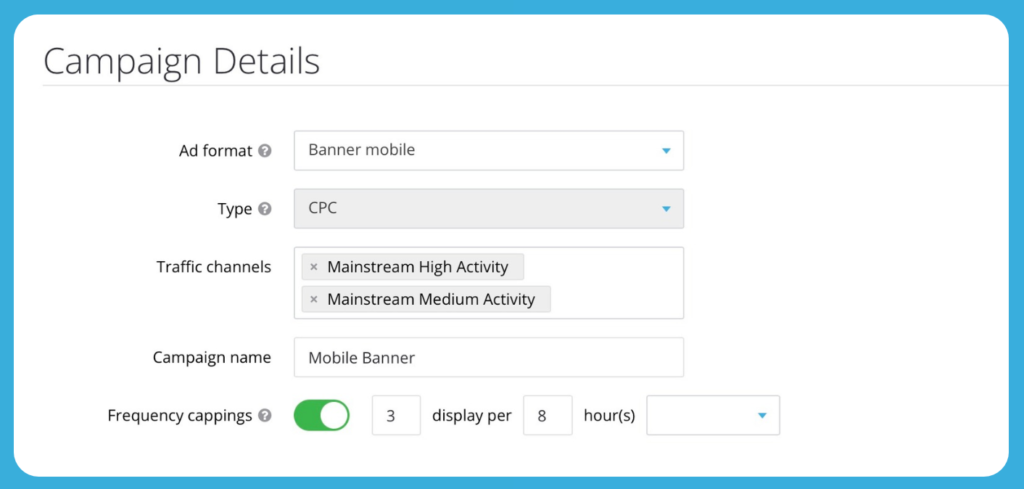
For this betting launch, we kept the campaign focused on mainstream traffic because the advertiser needed a cleaner mobile audience for a local betting funnel. The goal was not just to generate reach, but to drive users who could move from click to registration and then further to deposit.
- Frequency capping – 3 displays per 8 hours
We set the frequency cap to 3 views every 8 hours. For mobile banners, this is a pretty balanced approach. It gives the advertiser enough repeat exposure to test things out without being too aggressive. This is important for betting offers because showing an ad too often leads people to ignore it, while being too strict makes it harder to collect data and optimize the campaign effectively.
To analyze ad campaign performance, we recommend setting up Postback before launch. Postback helps track target actions and understand which traffic segments bring users who actually move through the funnel. To learn more, please check out our full tracking guide.

Next, we set the necessary targeting settings:
- GEO – Ukraine (UA)
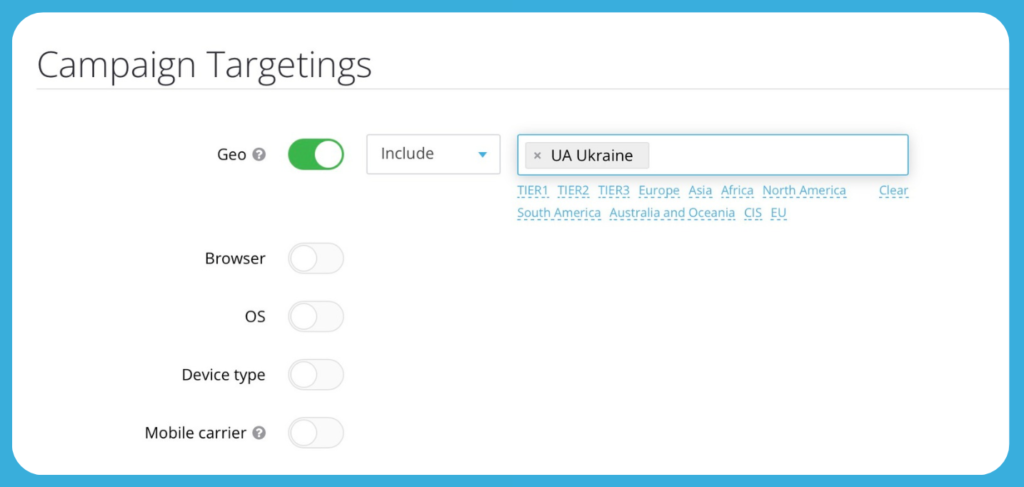
You can also configure campaign filters to manage Proxy and WebView traffic. In this case, we used the following settings:
- Proxy – Disallow
- WebView – Disallow
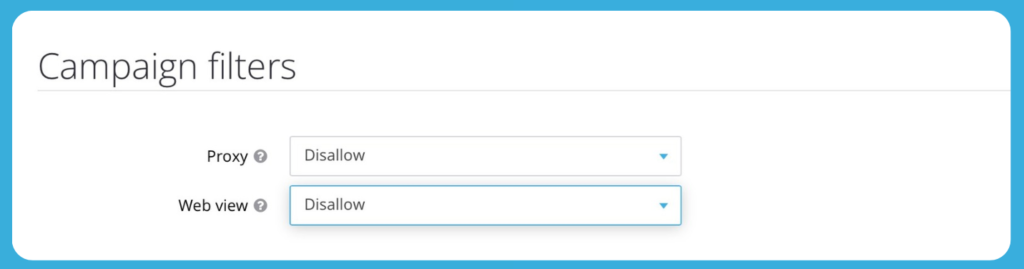
Proxy traffic was blocked to keep the audience cleaner and reduce low-quality visits. WebView traffic was also disabled, so the campaign could focus on browser-based mobile users and make post-click behavior easier to evaluate.
Elm
Business Development Manager HilltopAds
We made the launch as simple as possible from day one. We had mainstream traffic, and proxies were off, as well as our Webview. Frequency was capped at three impressions every eight hours. “When you have betting banners, you want to get enough impression so you have the data you need. but you need to keep the traffic non-noisy because noisy traffic basically will forever kind of hinder your ability to read the funnel.
You can set daily and total spend limits for your HilltopAds account. Here, the daily cap of $250 was used to control spending at the campaign-segment level, while the test as a whole incorporated sufficient volume across all active slices of the campaign to adequately test the GEO.
By the end of the May 1-8 period, the campaign reached 5,764,246 impressions and spent $2,104 in total.
Next, track your average CPC. In this campaign, the average CPC based on campaign statistics was $0.05. This gave the advertiser enough click volume to evaluate the betting funnel beyond CTR and identify which traffic segments were worth scaling.
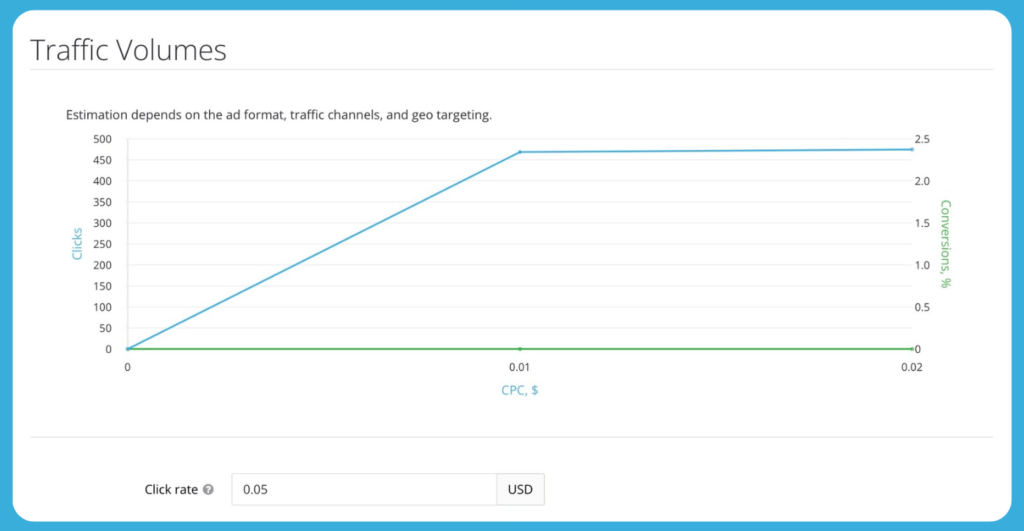
Advice from HilltopAds: as a starting point for a new betting offer, do not judge mobile banner traffic by CTR alone. In a GEO like Ukraine, the first goal is not just to buy cheap clicks, but to collect enough post-click data to understand which placements can generate registrations, deposits, and positive ROI.
Optimization Strategy
The campaign was not optimized around impressions alone.
For betting banners, a high number of impressions is useful only if it creates enough qualified clicks. A high number of clicks is useful only if users keep moving through the funnel. That is why the optimization strategy focused on post-click quality.
Throughout the launch, Elm and the advertiser monitored the campaign across several layers:
- which placements have a constant CTR;
- which placements were driving the clicks to registration;
- which sources had deposit signals;
- where click volume looked cheap but weak;
- how frequency affected user response;
- whether traffic quality stayed consistent after scaling.
The team did not treat all clicks equally. A source with many clicks but weak registrations could not be considered strong. A source with fewer clicks but better conversion quality was more valuable for the final economics of the campaign.
This was especially important because the campaign had a clear performance outcome: 162% ROI. That result could not come from CTR alone. It came from finding the traffic slices where clicks had a higher chance of turning into registrations and deposits.
In practice, optimization meant keeping the setup clean, watching placement-level performance, and moving budget away from segments that produced cheap but empty clicks.

Register with HilltopAds and get:
- Advanced targeting options
- Direct traffic sources
- Self-serve platform
- Fully-managed service
- Postback tracking
Results
During the May 1-8 launch period, the campaign generated:
- 5,764,246 impressions;
- 42,079 clicks;
- 0.73% CTR;
- 677 conversions;
- 1.61% CR;
- around 16 deposits;
- $0.05 average CPC;
- $2,104 total spend;
- 162% ROI.
The funnel looked like this:
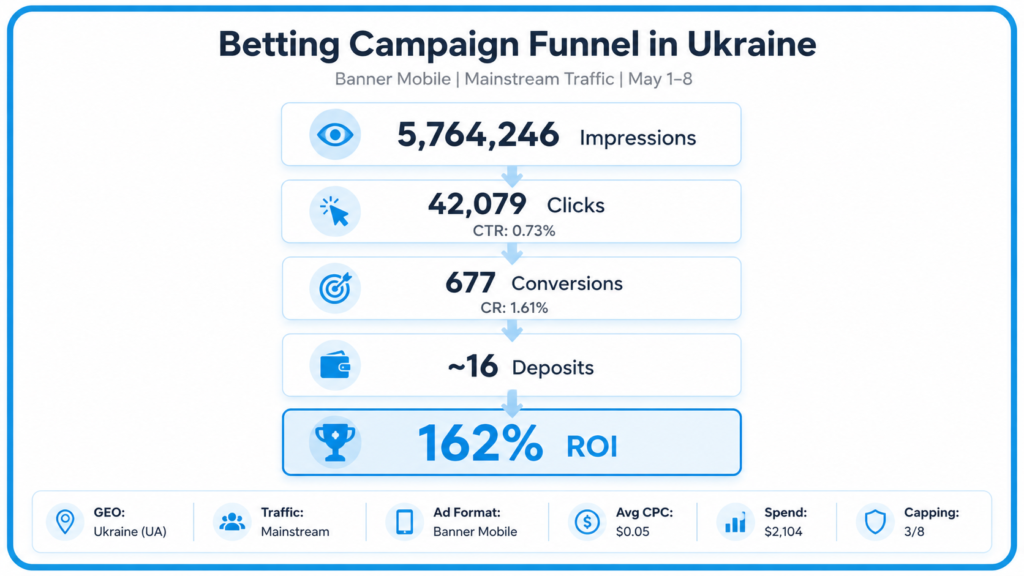
The click volume gave the advertiser enough data to understand which parts of the campaign were worth keeping. The conversion layer showed which sources could move users past the first click. The deposit layer confirmed that the campaign was not just generating registrations, but also bringing users with real betting value.
That is why the final ROI was the key result of this case. The campaign did not simply buy cheap mobile clicks. It used those clicks to find the traffic that could support a profitable betting funnel.
Elm
Business Development Manager HilltopAds
The campaign worked because we did not optimize for cheap clicks alone. We used click volume to find placements that could produce registrations and deposits. That is what turned the launch into positive ROI.
What Worked Best
Several factors made the campaign stronger.
First, Banner Mobile gave the advertiser enough reach to test Ukraine quickly. With more than 5.7 million impressions in 8 days, the campaign collected enough data to evaluate traffic quality instead of relying on a small sample.
Second, the campaign stayed on mainstream traffic. For this betting offer, that helped keep the audience cleaner and more suitable for a local sportsbook-style funnel.
Third, Proxy and WebView were both disabled. This reduced noisy traffic and made the post-click data easier to read.
Fourth, the campaign used frequency capping at 3 displays per 8 hours. This kept the ad visible enough to gather data, but not so aggressive that repeated exposure could damage performance.
The most important factor was looking beyond CTR. A 0.73% CTR and $0.05 CPC were useful metrics, but they did not show the full picture. The campaign became successful because the traffic also produced 677 conversions, around 16 deposits, and 162% ROI.
Elm
Business Development Manager HilltopAds
Mobile banners are not dead. But they need to be judged by more than CTR. If you only look at clicks, you can miss both the risk and the opportunity. The real value appears when you connect impressions, clicks, registrations, deposits, and ROI.
Conclusion
This case shows that mobile banners can still deliver strong results for betting offers – when they are optimized beyond clicks.
In Ukraine, the campaign reached 5,764,246 impressions, generated 42,079 clicks, delivered 677 conversions, brought around 16 deposits, and finished with 162% ROI. The setup worked because it combined a scalable mobile banner format with mainstream traffic, clean filters, frequency control, and funnel-based optimization.
The key lesson is simple: banners are not the problem. Shallow optimization is.
Want to test your own betting, sportsbook, casino, or iGaming offer with HilltopAds? Register as an advertiser, launch your Banner Mobile campaign, and work with our team to find traffic segments that can move users beyond the click.