


A dating ad can get plenty of clicks and still fail where it matters – registrations, subscriptions, and revenue. In 2026, the winning creative isn’t necessarily the one that grabs the most attention, but the one that attracts users who actually convert.
Dating is a busy vertical. Users are constantly exposed to similar ads featuring attractive profiles and the promise of finding a match quickly. Attracting the audience’s attention is only the starting point in 2026, as a dating creative should do more than win the click. It needs to move the right users through the whole funnel toward the conversion.
This guide looks at what makes dating creatives work and explains how to spot strong and weak patterns in real examples. It also shares insights on how to test creatives properly and turn the winning ideas into a campaign you can optimize and scale.
Got a dating creative worth testing?
Launch it with HilltopAds and see how it converts.
Before You Create a Dating Ad
The first step should be studying the dating offer itself. For that purpose, go through the product as a user would:
- Open the landing page;
- Sign up;
- Look at the matching flow;
- Start a conversation if possible.
Pay attention to where the paid step appears. The creative should prepare the user for that experience. Factors to consider here include the GEO, age, and interests of your target audiences.
It also makes sense to define the actual reason someone might stay with your product. For one dating offer, that could be serious relationships. Another may sell casual conversations, local discovery, niche matching, or an AI companion experience.
Once you’ve identified the core value of the product, check if the ad conveys it correctly and doesn’t make exaggerated claims. When using hooks like nearby profiles, verified profiles, instant chats, or a specific matching feature, the product should deliver on that promise.
Read also the article with an analysis of gambling creatives:
What Makes Dating Creatives Convert in 2026
Four things are worth checking before a creative goes live: attraction, relevance, a specific outcome, and trust. Let’s take a closer look at each one.
Attraction
The first frame should have one clear focal point, because several profiles, stickers, and buttons competing at once make the ad harder to read. A creative showing a face, one short hook, and a CTA is usually enough to catch attention without feeling overloaded.
Relevance
Good angles often come from addressing specific situations. For example, someone tired of empty chats has a different motivation from someone who wants a serious relationship. An older audience may respond to a completely different visual and tone than users in their early twenties.
Specific Outcome
The benefit of the offer should be clear from the ad itself. A specific message like “compatible profiles nearby” gives users more to respond to than a broad promise to “find love”. The CTA, in turn, can naturally move them on to the next step with “Find matches” or “Chat now.”
Trust
Realistic images, natural wording, and promises the product can deliver all help with building credibility. Exaggerated claims may help attract attention, but if the landing page cannot support them, users are likely to get skeptical after the click.

Elm
Business Development Manager HilltopAds
In 2026, in the dating niche, I would first and foremost highlight AI-driven creative content and advertising via messaging apps, including Telegram bots. Local dating projects in Asia and Latin America are also currently undergoing active development. For mobile traffic, vertical videos in the style of TikTok are becoming increasingly popular.
That said, I wouldn’t look for a single, one-size-fits-all creative that works equally well everywhere. It’s better to test several creative and landing page options tailored to a specific GEO and audience, collect enough data, and then use the results to determine the combination that converts best.
Good vs Bad Dating Creatives: 10 Examples
A visual review can help you pinpoint the features of stronger creatives. Below, we’ve gathered the ten examples, from more successful to weaker ones, and highlighted their upsides and downsides.
Strong Creative Examples



Creative 1 leads the pack with its core message visible from the start – “Real people. Real chemistry. Real dates.” To add substance to the offer, the points about verified profiles, privacy, and meaningful conversations have been included beneath the main headline.
The message in Creative 2 focuses on a frustration familiar to many dating app users – spending a long time scrolling and swiping without getting the desired result. The slogan “No swiping games. Just great matches.” creates a clear perspective for the ad, while the accompanying copy about deep conversations and people who do reply expands on the idea.
As for Creative 3, it is more product-led. The phone screen, profile details, and matching features help users picture what the experience looks like before they click.
Overall, these three ads use different approaches, which is exactly what you want during early testing.
Creatives with Mixed Potential
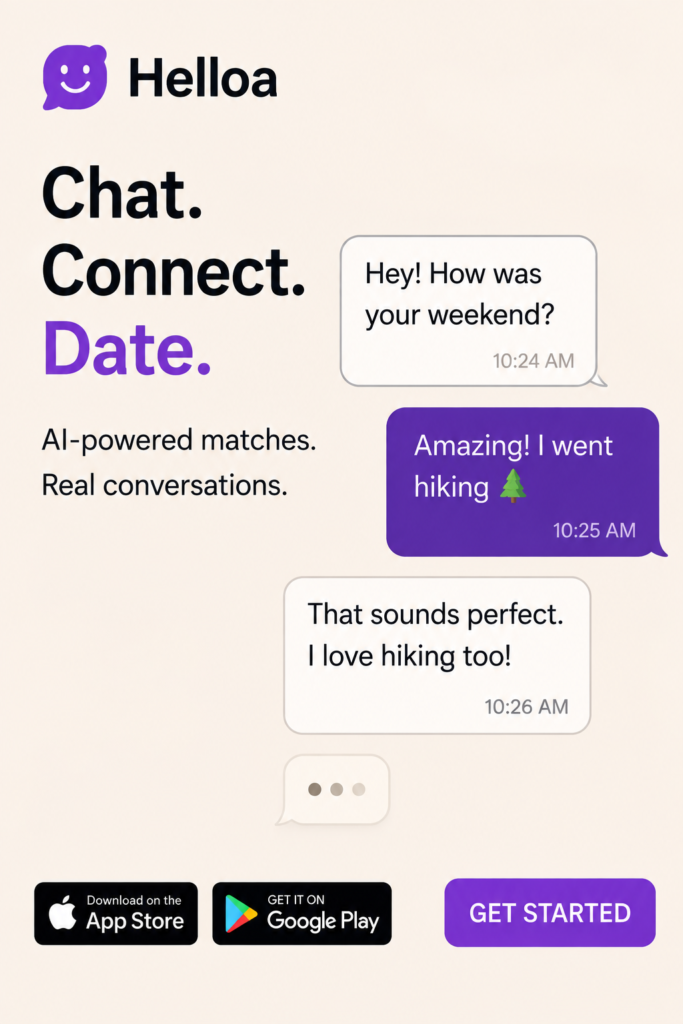
The next two creatives are less convincing than the three leaders pinpointed above. Creative 4 is neat and readable, but “Chat. Connect. Date.” could advertise almost any dating app. It does highlight the AI-powered matching, but that does not look like a strong reason to choose the product.
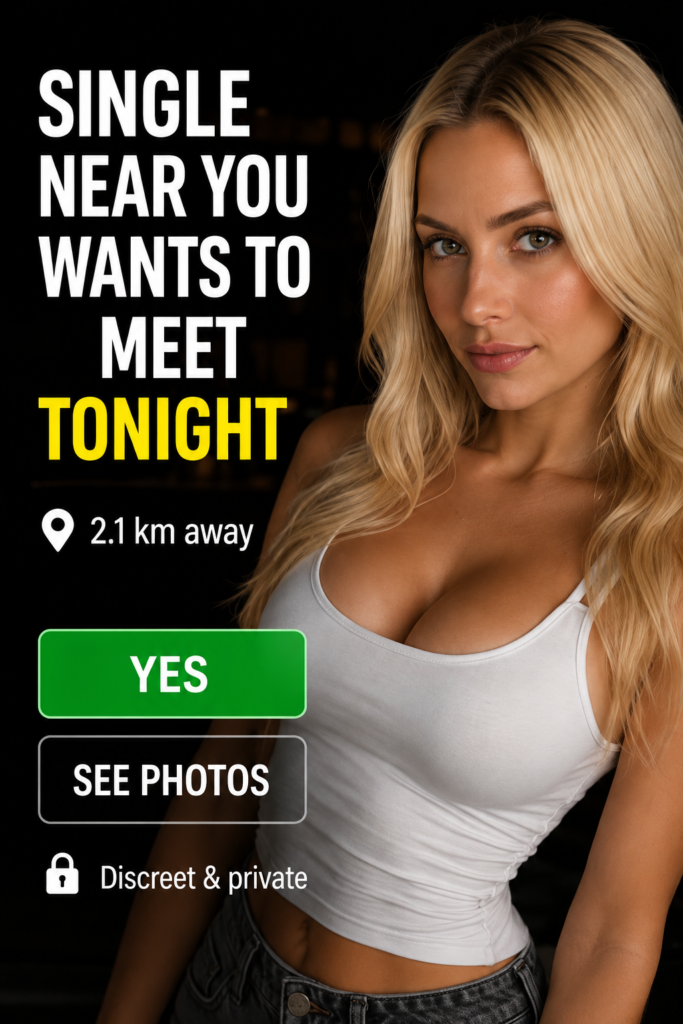
Creative 5 relies on a more provocative hook. The nearby profile and “meet tonight” message create an immediate sense of possibility, but they also raise expectations before the user knows anything about the product. Thus, the offer has to deliver on that impression so that users do not get disappointed after a click.
Creatives That Need Improvement





Some of the weaker examples have no real proposition beyond “being single is bad.” Others, like the “100% match guarantee” example, pile several claims into one ad. The 24-hour-girlfriend creative pushes that approach even harder.
Creative 9 is quieter, but generic stock-style messaging gives users little reason to remember it. Creative 10 goes in the opposite direction: neon graphics, several claims, a price burst, arrows, and a large CTA all fight for the same few seconds of attention.
As a quick test for a creative in question, cover the logo and ask whether you can explain what the ad is selling and why someone should click it. If the answer is only “dating,” the idea probably needs more work.
Read our article on how to optimize your advertising campaigns correctly:
How to Test Dating Creatives
Even a creative that seems to follow all the right principles covered above still needs to prove itself in testing. You cannot know in advance which idea will perform best with real traffic.
Start by testing different advertising approaches or product angles. Once you find a stronger direction, test individual elements within it: the visual, headline, profile or character, offer, and CTA. However, avoid changing everything at once – when doing so, you will not know which change affected the result.
Elm
Business Development Manager HilltopAds
The main mistakes are drawing conclusions too early, failing to set up proper tracking and postbacks, and using the same creatives for too long. It’s important to collect enough data, test different ad combinations and landing pages, and gradually phase out ineffective options based on actual conversions.
Such an approach worked in a recent HilltopAds AI Dating campaign. The advertiser used around 300 creatives across its campaigns, testing different characters, messages, and visual approaches. Realistic banners performed best, while weaker variations were gradually removed from rotation.
And do not judge creatives by CTR alone. Track what happens after the click as well, including registration, activation, and purchase or subscription. In the same HilltopAds case, the target action was a subscription purchase: the selected 14-day campaign period generated 81 purchases at an observed CPA of $39.91, almost exactly matching the advertiser’s $40 target.
Find the creatives that drive real conversions
sign up with HilltopAds and scale what works.
How to Promote Dating Campaigns
Visuals are one part of the system. To promote dating creatives profitably, traffic, targeting, localization, tracking, and optimization must support the same audience hypothesis.
Choose a suitable traffic source
The ad network needs enough traffic for testing and formats that fit the offer. Networks like HilltopAds work with advertisers from the dating niche and support various formats (Popunder, In-Page, Banner, and Video VAST traffic are among the common ones).
Popunder is widely used in the vertical, while banners are useful when the profile, character, or product interface carries the idea. Video gives you more room if the offer needs a short demonstration.
Elm
Business Development Manager HilltopAds
For dating, I would first and foremost recommend Popunder, especially for mobile traffic. This format generates a good volume of traffic, so you can gather statistics fairly quickly, identify which audience segments convert best, and then optimize your campaign. At the same time, it’s important to keep in mind the specifics of Popunder: this is a cold audience, so I wouldn’t direct users straight to the main offer.
It’s best to use unique pre-lands that first build interest and lead up to the desired action. You can also test push notifications and other formats for dating, but I would consider pop-unders one of the main starting points.
Set targeting
Start with the limits that come from the offer itself – GEO and device are the most obvious parameters. Depending on the campaign, OS, browser, language, carrier, connection type, or other settings may also matter.
Do not narrow everything on day one simply because the controls are available. A tiny segment can produce numbers that look interesting but are based on too little traffic to trust.
Localize for each GEO
Localizing the offer goes beyond mere translation. The person in the ad, age, setting, naming, tone, relationship intent, and even how direct the CTA feels can change from one market to another.
When possible, split major GEOs into separate campaigns. This way, a strong result observed in one market will not hide weaker outcomes in another.
Track what happens after the click
After the campaign is launched, track the full funnel from click to the target conversion. With S2S postback tracking in HilltopAds, you can see what happens after registration and where users leave before making a purchase or subscription.
If you only look at clicks and registrations, traffic sources and creatives may look profitable at the top of the funnel. However, they might be failing at the bottom, as users sometimes only drop out later in the funnel, and that can go unnoticed.
Optimize the full combination
Depending on GEO, traffic source, device, or format, your creatives can produce different results. A banner may look weak overall but still work well in one segment. Another one can bring many cheap registrations but only a few subscriptions.
When scaling, experienced media buyers look at the campaign as a whole. The combinations that spend without reaching the target action are the first candidates to be paused. Scale the ones that keep delivering the target conversion, and cut those that only look strong at the click level.
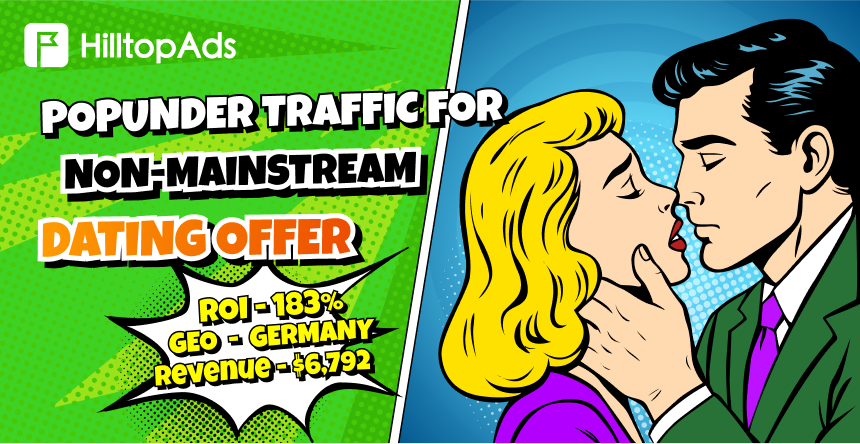
We recommend that you familiarize yourself with the successful cases of advertisers launching dating offers:
Running dating traffic with HilltopAds
HilltopAds offers direct dating traffic across Tier 1, Tier 2, and Tier 3 markets, with Germany, the US, Canada, the UK, and Turkey listed among the top GEOs for the vertical. Advertisers can run campaigns through the self-serve platform or use a fully managed option.
Format choice depends on how much of the offer you need to explain. HilltopAds says Popunder is the most popular option for dating and is commonly used to bring in leads or sign-ups at scale. In-Page works better with shorter messages, while Video VAST and Banners give the creative more room to sell the offer visually.
Campaigns can be adjusted with advanced targeting, while postback tracking helps connect traffic with actual conversions. HilltopAds also offers CPM, CPC, and CPA Goal pricing options, as well as Auto Optimization. The latter can automatically BlackList traffic sources according to campaign rules, and proven sources can be handled through WhiteLists.
Conclusion
Dating creatives are rarely finished after the first launch. Even a good idea needs to be tested, compared, and refreshed as the campaign runs.
Optimization should look at the audience the ads bring in and what those users do next. Therefore, it’s crucial to collect and analyze data for all stages of the funnel and note where the downstream conversion happens. Based on data-driven insights, keep refreshing your ad creative pool and finding new winning combinations.